logo
The new BMW 6 Series Gran Coupe arrives in June

The new BMW 6 Series Gran Coupe arrives in June

There are only a few days to go before BMW adds a third model to its 6 Series range.

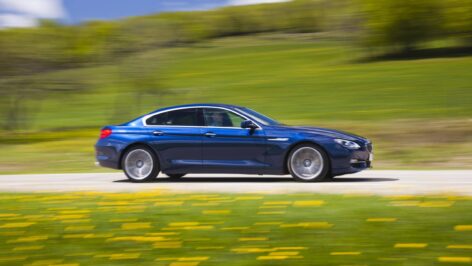
This June will see the arrival of the new Gran Coupé to the range, BMW’s first four-door coupé. It is a new grand tourer with the space and ease of access of an executive saloon.

To propel this new BMW are a choice of three engines. At the top of range is a new 450hp V8 TwinPower Turbo engine but if you prefer a little less power then you can choose from a six-cylinder petrol or six-cylinder diesel powerplant!

All three engines drive through an eight-speed automatic transmission and come with the full suite of EfficientDynamics technologies, including Auto Start-Stop, ensuring highly responsive performance goes hand-in-hand with low fuel consumption and emissions. Extensive use of aluminium in the body and chassis reduces weight and ensures that the 6 Series Gran Coupé has the agility and precision expected of a BMW.

The 6 Series has always been a favourite of ours, especially after we tried the 650i Convertible (thank you again BMW USA!) and this new Gran Coupé certainly has presence. We’ve yet to see it in the flesh but if the drives as good as these photos look then it wont disappoint.

Model Price OTR from Power
Hp
Torque
Nm
0 – 62mph Seconds Top Speed Mph Combined Mpg CO2Emissions g/km
BMW 650i Gran Coupé £70,650 450 650 4.6 155* 31.7 206
BMW 640i Gran Coupé £61,390 320 450 5.4 155* 35.8 181
BMW 640d Gran Coupé £63,900 313 630 5.4 155* 49.6 148

* Electronically-limited 

The new BMW 3 Series Touring

The new BMW 3 Series Touring

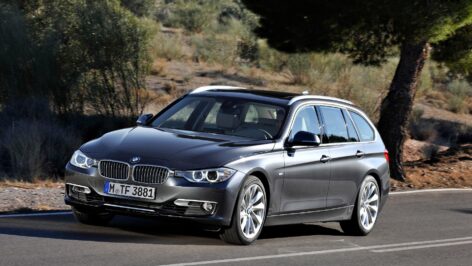
The new BMW 3 Series Touring will offer an even stronger blend of thoughtful practicality and outstanding driving dynamics when it comes to the UK in September. Larger, and more spacious inside than ever before, this truly versatile vehicle possesses a wide range of practical features in addition to the class-leading driving dynamics expected of any BMW.

A load capacity that is the largest in its class, complete with innovative storage solutions, is wrapped in a dynamically styled, strong but lightweight body that follows the same winning formula of previous BMW 3 Series Tourings over the years. After all, it was BMW that invented the premium Touring segment back with the E30 3 Series and it has proved a winning formula ever since then with an average 8,500 new car buyers a year.

Three advanced, powerful, yet frugal engine choices are available at launch. For example, the new BMW 330d Touring produces 258hp and 560Nm of torque, enough to reach 62mph from rest in just 5.6 seconds, yet still achieves 55.4mpg on the combined cycle. Further engine variants will join the range in due course.

Model Power
Hp
Torque
Nm
0 – 62mph
Seconds
Top
Speed
Mph
Combined
Mpg
CO2
Emissions g/km
Price
OTR
BMW 328i Touring 245 350 6.0 155* 41.5 159 £30,400
BMW 320d Touring 184 380 7.7 143 60.1 (61.4) 124 (122) £29,380
BMW 330d Touring 258 560 5.6 155* 55.4 135 £34,700

*Electronically-limited. **Automatic transmission only.

From the tip of the nose to the B-pillar, the 3 Series Touring is exactly the same as its Saloon brethren: an expressive front end, accentuated by the 37mm wider track over the previous generation model, creates the perfect foundation for the frontal styling. Twin headlamps, with LED accent lights, combine with the gently forward sloping BMW kidney grille to generate a purposeful face, further highlighted by the additional outer air intakes below the headlamps and the sweeping lines of the bonnet that converge on the grille.

From the side, the new 3 Series Touring is defined by the sweeping silhouette, with its smoothly sloping roofline and glasshouse that extends to the rear of the vehicle. The new car is 97mm longer overall and 50mm longer in the wheelbase than before and that, together with the steeply raked D-pillars, angle of the rear window and the traditional ‘Hofmeister kink’, adds a real sense of forward motion to the profile.

At the rear, the spoiler ‘peak’ that accentuates the long roofline, together with the horizontal lines and L-shaped lights set far out to the edges, combine with the 48mm wider track to plant the design on the road.

The interior design of the new BMW 3 Series Touring is identical to that of the recently introduced 3 Series Saloon. It’s a cockpit with a traditional BMW driver focus creating a sporty interior ambience that is conducive to driving enjoyment.

The clear, circular dials and the flatscreen monitor for the iDrive system integrated into the dashboard structure, define the instrument panel. The iDrive controller is mounted within easy reach of the driver down on the centre console.

More than ever, the cabin of the new 3 Series Touring demonstrates BMW’s commitment to quality, both in the range of materials used and the way the vehicle is assembled. This strength in depth is illustrated and personalised by the large range of interior trims and upholstery materials that can be combined in different ways.

To fulfil its brief as a genuine Touring model, the new 3 Series Touring clearly needed to offer customers a broad range of practical features. However, BMW has surpassed that brief, building on the achievement of previous model generations and offering class-leading interior space as well as stand-out new features.

The foundation for the new Touring’s class-leading attributes lies with its increased exterior dimensions. From them, the engineers have been able to improve the interior package for rear seat passengers considerably: there is now 17mm extra knee room and 9mm more headroom making ingress and egress to the rear seats is easier than ever before.

Front seat passengers gain larger door pocket storage areas that can accommodate a one-litre drinks bottle, complemented by two large cup holders on the centre console. These can be exchanged for a trinket tray, if so desired.

With its loading sill just 620mm off the ground (and protected by a stainless steel strip) the new rear luggage area is a significant 35 litres greater in capacity than the previous generation model, at 495 litres.

Greater practicality including new automatic boot opening
As standard on all models, customers benefit from luggage securing lugs, a pair of coat hooks, a luggage net and strap and a deep storage compartment on the left-hand side of the load area. The luggage cover can be stored under the boot floor when removed, thereby allowing it to be carried securely on a journey if it is to be required later on. The separate partition net can be used even when the rear seats ar folded flat.

These rear seats have a 40:20:40 split, and with a large through-loading hole in the centre can accommodate a number of skis or snow boards while four occupants are travelling in the car. With the seats folded, the total overall space is an outstanding 1,500 litres, with a near-level load floor and a wide tail gate aperture making the loading of large items easier than ever before.

As standard equipment the new 3 Series Touring receives an electrically powered boot, controlled either via the key fob, a switch on the A-pillar or a button on the boot itself. In addition, customers can enjoy further convenience with the Smart Opener feature offered as part of the Comfort Access option. When specified, the boot can be opened with the motion of a strategically placed foot beneath the rear bumper.

The new BMW 3 Series Touring has a split rear boot opening with the upper glass area able to open independently of the overall unit. This is unlocked electrically via a button located on the rear wiper arm, and then opened manually. It is particularly convenient when loading in small items, perhaps where space behind the vehicle is limited.

The optional storage package takes the practicality of the new 3 Series Touring a stage further, with a net on the left-hand side of the tailgate and a reversible floor section with a protective coating on the underside for when carrying messy items. There is also an adaptive load space attachment system of user-friendly plug-in elements to divide up the load space, which can be stowed under the boot floor when not in use.

Further options include aluminium roof rails and the electrically operated large panoramic glass sunroof. A trailer hitch, electrically powered to fold out of the rear bumper, turns the new 3 Series Touring not only into an admirable tow car, but can also be adapted for the easy fitment of bike racks.

Class-leading drivetrain options
At launch, the new BMW 3 Series Touring is powered by a choice of a petrol or two diesel powerplants, all using BMW’s TwinPower turbo technology. In due course, a much wider selection of engines will be offered, in line with the 3 Series Saloon models.

Likely to be the biggest selling model, the 320d uses the highly regarded 2.0-litre TwinPower turbo diesel engine from the previous generation, but with its own set of modifications to make it both cleaner and more frugal. The common rail fuel injection – via solenoid injectors operating at up to 2,000 bar – combines with a variable geometry turbocharger (with enhanced thermodynamic properties) to produce 184hp and 380Nm of torque. It matches these outputs with a superb combined fuel figure of 60.1mpg (61.4mpg when fitted with the eight-speed automatic gearbox) and a CO2 output of 124g/km (122g/km).

The initial petrol-powered offering is the 328i, the perfect demonstration of BMW’s current cutting-edge engine philosophy. This four-cylinder, 2.0-litre engine features all the latest TwinPower technology: high precision direct fuel injection, a twin scroll turbocharger, Double Vanos variable camshaft timing and BMW’s VALVETRONIC variable valve control.

With its compact, light, all-aluminium construction, this 1,997cc powerplant has a linear power delivery with superb throttle response. Maximum power is 245hp and peak torque stands at 350Nm, developed from just 1,250rpm and then held all the way to 4,800rpm. Accordingly, performance figures are suitably dramatic, with 0-62mph arriving in just six seconds and a top speed electronically limited to 155mph. Even so, the 328i has a combined fuel consumption figure of just 41.5mpg and emits only 159g/km of CO2.

The current pinnacle of the diesel line up is the 330d model. Using the award-winning 3.0-litre, all-aluminium straight-six engine but with substantial modifications over the previous generation, this powerhouse redefines smooth, frugal performance in this market segment. BMW engineers have managed to further lower internal friction and reduced the weight of the engine, while optimising the fuel injection system. There’s a new air intake and a lighter crankshaft to boost throttle response, along with lighter turbine blades in the turbocharger and modifications to the pre-injection phase of the solenoid injectors – operating at 1,800 bar – for the same reasons.

The result is 258hp at 4,000rpm, and an immense 560Nm developed over a broad plateau between 1,500rpm and 3,000rpm. Unsurprisingly, when mated to the standard 8-speed gearbox on this model, the 330d possesses some outstanding performance figures, with 62mph achieved from a standing start in only 5.6 seconds, and a top speed electronically limited to 155mph. As ever, the trump card is this level of performance blended with outstanding efficiency: the 330d achieves 55.4mpg on the combined cycle, and emits just 135g/km of C02, making it a particularly clean high performance choice.

Later in the year the new 3 Series Touring range will be expand with a 320i petrol engine producing 184hp and 270Nm torque, plus a further pair of 2.0-litre diesel engines – the 318d and 316d. The former will produce 143hp and 320Nm of torque, while the latter will have 116hp and 260Nm of torque. Fuel consumption and emissions data will follow in due course.

The 328i and 320d models come as standard with a six-speed manual gearbox, which in the case of the 320d has dry sump lubrication. It also features innovative carbon friction linings for the synchromesh. The new eight-speed automatic gearbox – standard on the 330d – has been designed to be so efficient, both through its intelligent lightweight design and software control – that it is virtually a match for the manual option in this area, and up to 15 per cent more efficient than the old six-speed automatic gearbox from the previous generation model. Customers looking for an even sportier drive can specify a sports option for the new automatic transmission, offering more dynamic shift algorithms and gearshift paddles mounted on the steering wheel.

BMW EfficientDynamics
BMW’s Efficient Dynamics initiative means the new 3 Series Touring comes as standard with the Auto Start-Stop function, Brake Energy Regeneration and the ECO PRO function. Advanced ancillary units, such as the on-demand coolant pump and the electronically controlled oil pump, further enhance intelligent energy management.

The most dynamic chassis in class
With a longitudinally mounted engine sat far back in the chassis, rear-wheel drive, superb weight distribution and a light, stiff bodyshell, the new BMW 3 Series Touring has all the right ingredients for ride and handling excellence. To that end, BMW engineers have sought to improve upon the already highly regarded package of the previous generation model by careful honing of the core components.

With its longer wheelbase (50mm) and wider front and rear tracks (37mm and 48mm respectively) the new car gave those engineers an even better basis with which to work their magic on. The double joint tie bar front axle with its spring struts and anti-roll bars, has torque struts, wishbones and swivel bearings made from aluminium to reduce the unsprung mass. Given that it doesn’t need to counter any torque steer (thanks to the rear wheels receiving the torque from the engine), the kinematics of the front axle can be devoted to offering the finest handling and steering precision.

For the rear axle, the new 3 Series Touring uses BMW’s advanced five-link arrangement with significant improvements. The long wheel travel and precise location it provides the new 3 Series Touring with both agility and excellent comfort properties, including isolation from noise and vibration.

Customers can choose to further enhance the dynamic handling of their new vehicles with two suspension options. The M Sport suspension, featuring a 10mm drop in ride height, provides firmer springs and damping as well as thicker anti-roll bars. Selecting this option also brings with it 18-inch M alloy wheels. There is then the further option of the Adaptive M Sport suspension, with electronically controlled damping that adjusts the damper mapping to the road surface and driving situation. The driver can also use the Driving Dynamic Control switch to vary the basic suspension tuning between more comfortable or sportier settings according to individual preference.

The new BMW 3 Series Touring is fitted with an electromechanical power steering system that only operates when steering assistance is actually required. Not only is this system lighter and more fuel efficient than conventional power assistance systems, it offers a high level of steering precision. The BMW 330d Touring and BMW 328i Touring come as standard with the Servotronic function for speed-sensitive steering assistance, while Variable Sports Steering is also available as an option, providing different steering gear ratios depending on the angle of the steering wheel.

The job of restraining the new BMW 3 Series Touring falls to its lightweight floating caliper brakes with large inner-vented discs, while the aluminium front calipers provide a useful further reduction in unsprung masses. The driver’s inputs are backed up by a suite of advanced electronic safety systems integrated into the Dynamic Stability Control (DSC) system. An M Sport brake option is available for performance-orientated customers, with aluminium four-piston fixed callipers at the front and two-piston fixed callipers at the rear, along with generously sized brake discs.

Body and safety
The new BMW 3 Series Touring offers its occupants outstanding active and passive safety. Careful selection of raw materials, a high-strength structure and intelligent use of lightweight design principles, the body meets the most exacting safety standards and, in conjunction with highly efficient restraint systems, guarantees maximum occupant protection. Compared to its predecessor, body stiffness has been increased by more than 10 per cent, and yet the overall structure weighs 40kg less than before.

The BMW 3 Series Touring comes as standard with front and side airbags for the driver and front passenger, as well as head airbags for both rows of seats. All seats are fitted with three-point inertia-reel seat belts, while the driver and front passenger also have belt latch tensioners and belt force limiters, with ISOFIX child seat attachment points on the rear seats.

Equipment and model lines: More choice, more options.
The new BMW 3 Series Touring benefits from a particularly generous amount of standard equipment throughout the range. The entry-level ES model features 17-inch alloy wheels and chrome exhaust pipe trim, plus the automatic boot opening. Inside, there is automatic air conditioning, the BMW Professional radio with 6.5-inch colour screen and iDrive control, keyless start, cruise control, Driver Performance Control featuring ECO PRO mode, a USB audio interface and the 40:20:40 split rear seats. SE models add PDC front and rear, an automatic dimming mirror, two-zone air conditioning and automatic lights and wipers.

From there, the 3 Series Touring customer has a broad range of model line options featuring the new Sport, Modern and Luxury, and topped by the M Sport variants.

Sport adds further dynamism to the exterior design with black kidney grille slats, in a chrome-coloured surround, and gloss black inserts in the front apron. Alloy wheels are 17-inch or 18-inch items in double-spoke design (18-inch items are bi-colour), while optional high-gloss black for the exterior mirrors and matching paintwork for the B-pillars takes the theme a stage further. Inside, red is used for the trim rings, scales in the circular dials and stitching on the sports steering wheel, while a base trim strip in high-gloss black with coral red accents underlines the sporting ambience of the cockpit. The standard sports seats can be specified in a choice of three different types of upholstery and four colours, while the ignition key features a black finish with red detailing.

Luxury possesses a more elegant, discreet appeal, with 11 chrome kidney grille slats and two slightly offset chrome trim strips in the front apron air intakes, and a high-gloss chrome trim strip running horizontally above the air scoop. In contrast to the Sport, the window frames and weather strip are trimmed in chrome; at the rear, a high-gloss chrome trim runs above the rear apron and there’s a chrome tailpipe embellisher. Unique 17-inch or 18-inch alloy wheels in multi-spoke design add to the visual impression. Inside, chrome elements – such as the surround for the radio and air conditioning units, and part of the ignition key – combine with high-gloss wood strips, seats with distinctive stitching and a choice of two upholstery materials in four classically elegant colours, to create an exclusive ambience.

Modern features satin-finish aluminium for the kidney grille and the double trim strips for the air intakes, complemented by 17-inch or 18-inch turbine-style alloy wheels. The light-coloured dashboard, with a steering wheel in dark oyster, works with leather upholstery or cloth-leather combinations in oyster or black. There’re a choice of three trim surfaces with accent strips in pearl-effect chrome, and a unique three-dimensional structure for the surface of the wood. The oyster-coloured ignition key features matt silver detailing.

The M Sport option features a new aerodynamic package including numerous body components and the BMW Individual High-gloss Shadowline trim. The optional exterior paint shade of Estoril Blue metallic sets the model further apart, as do the 18-inch or 19-inch M alloy wheels. Inside, features such as the M door sill finishers, an M leather steering wheel and an M driver’s footrest create the right sporting ambience, while the M Short-gearstick (in models with a manual transmission), M Sport suspension and the optional M Sport brakes with contrasting blue paint finish define the model from a technical perspective. Dakota leather covers the interior including the front sports seats, while trim elements in Aluminium Hexagon with accent strips in either Estoril Blue matt or high-gloss black add the finishing touch.

ConnectedDrive
The new BMW 3 Series Touring features a raft of driver assistance and mobility services at the vanguard of this market segment. BMW groups them under the ConnectedDrive term due to the intelligent way they interact with each other, to the benefit of the customer.

Highlights include the latest full colour Heads Up display, the Lane Change and Lane Departure Warning system – which includes a collision warning system with a braking function monitored by radar and cameras – and the Active Protection Package that pre-empts a collision and readies the car’s systems. Further options include the High Beam Assistant and Adaptive Headlights, the Surround view camera and Parking assistant and Active Cruise Control with a Stop and Go function.

ConnectedDrive enables the extensive use of external mobile phones and music players, with offerings from BMW Live and BMW Online. Thanks to new Bluetooth office functions, internet-based services along with calendar entries and text messages can be viewed in the Control Display of the iDrive operating system and read out via the Text to Speech function. In addition, passengers can access their personal music library.

The BMW Connected app allows the use of web radio and social networks like Facebook and Twitter in the car. Using the My BMW Remote app, meanwhile, lets you remotely unlock and lock the car as well as control the auxiliary heating. Finally, information and office services along with travel (RTTI traffic information is a further option) and leisure planners using the Google Maps and Panoramio services are also available.

The new 2013 BMW X1

The new 2013 BMW X1

The new BMW X1 now offers an even more sporty and refined take on the premium compact crossover, a market it defined at launch two and a half years ago. With revised dynamic exterior styling, detail improvements to the cabin and a new range of advanced diesel engines, the new X1 is perfectly placed to continue the sales success of the outgoing model. Every rear-wheel drive X1 now emits less than 130g/km of CO2, and with the option of a new eight-speed automatic gearbox combined with BMW’s award-winning EfficientDynamics technologies, the new BMW X1 range is more efficient than ever before.

Customers can now also choose from two new models: Sport and xLine. In addition, SE and M Sport specifications receive an increase in standard equipment, further enhancing the value to the customer.  Priced from £24,660 for the BMW X1 sDrive18d, the new BMW X1 goes on sale from July, 2012.

Model Power
Hp
Torque
Nm
0 – 62mph
Seconds
Top
Speed
mph
Combined mpg CO2
emissionsg/km
Price from
OTR
BMW X1 xDrive25d 218 450 6.8 142 (141) 47.9 (51.4) 154 (145) £31,860
BMW X1 xDrive20d 184 380 8.1 133 (132) 51.4 (52.3) 145 (143) £27,580
BMW X1 sDrive20d 184 380 7.8 (7.9) 136 (135) 57.6 (56.5) 129 (132) £26,090
BMW X1 sDrive20d EfficientDynamics 163 380 8.3 133 62.8 119 £26,090
BMW X1 xDrive18d 143 320 9.9 (10.1) 121 51.4 ( 52.3) 144 (143) £26,150
BMW X1 sDrive18d 143 320 9.6 (9.9) 125 57.6 (56.5) 128 (132) £24,660


The crisp, distinctive lines of the BMW X1 have been strengthened with a comprehensive range of stylistic enhancements. From the front, the X1 receives extended painted surfaces, emphasising the X-shape running along the bonnet’s precision lines, through the kidney grille, and into the lower bumper. The new headlamps add to this dynamic ‘face’, and when specified with the optional Xenon light technology, white LED corona rings and a white LED active eyebrow element provide an even more distinctive frontal appearance to the X1, further enhanced by the new fog lamp surrounds.Exterior design: reinforcing the sporting message

From the side, the new X1 features reduced plastic bordering at the lower edge of the body, while the indicators are now integrated into the wing mirrors. Nevertheless, with its rising swage line and chunky wheel arch extensions, the new X1 is instantly recognisable as a BMW X model. At the rear, larger painted areas echo the frontal treatment, while there is a more prominent underguard to reinforce the sporty, off-road appearance of the X1. New exterior colours and alloy wheel designs complete the new look.

Interior evolution: creating the right ambience

The driver-focused cabin of the BMW X1 has received minor adjustments for this revised generation. The driver’s side of the angled centre console is now shallower, and covered with a higher quality surface material, while the panel for the sound system and climate control is now finished in high gloss black to match the air vent surrounds. The new BMW X1 features a storage compartment in the instrument panel as standard, but when the vehicle is specified with satellite navigation, this becomes the operational screen for the iDrive system – highlighted with chrome accents. Elsewhere there is revised trim for the gearlever surround, cup holder and headlamp switch to create a high quality atmosphere within the cockpit of the new BMW X1.

A new engine range: TwinPower technology for maximum performance

The new BMW X1 features a range of diesel power engines all based on the latest 1,995cc, all-aluminium BMW four-cylinder unit featuring common-rail direct fuel injection and BMW’s TwinPower Turbo technology. For the sDrive18d, xDrive18d, sDrive20d and xDrive20d, TwinPower equates to the addition of the latest variable intake geometry turbocharger to produce superb power and torque outputs with outstanding efficiency.

For the variants wearing the 18d badge, the four-cylinder diesel provides an output of 143hp and a peak torque of 320Nm delivered between 1,750 and 2,750rpm. In sDrive form that equates to an impressive sub-ten second zero to 62mph time of 9.6 seconds and a top speed of 125mph. This impressive performance is combined with a fuel consumption figure of 56.5mpg and a CO2 output of 128 g/km. The four-wheel drive xDrive model shares identical engine outputs with its rear-wheel drive relation, reaching 62mph from rest in just 9.9 seconds and reaching a top speed of 121mph. It returns 51.4mpg on the combined cycle while it boasting CO2 emissions as low as 143g/km.

The 20d TwinPower diesel engine is also available in both sDrive and xDrive variants, and produces 184hp with 380Nm of torque available from 1,750 – 2,750rpm. This allows the sDrive model to reach 62mph in 7.8 seconds, before travelling on to a top speed of 136mph. Not to compromise on efficiency, the sDrive20d achieves 57.6mpg and emits just 143g/km of CO2. The xDrive20d also features an identical engine output to the sDrive20d and completes the 0-62mph sprint in 8.1 seconds, with a top speed of 133mph and fuel consumption of up to 52.3mpg with CO2 emissions of just 143g/km.

The sDrive20d EfficientDynamics is only available in rear-wheel drive form with a manual gearbox, and features a uniquely tuned two-litre diesel engine with 163hp and 380Nm of torque. Thanks to this and a range of other efficiency measures, this model achieves a combined fuel consumption figure of 62.8mpg and emits just 119g/km of CO2. However, it still reaches 62mph from rest in just 8.3 seconds and goes on to a top speed of 133mph.

The new BMW X1 has a new flagship model in the form of the xDrive25d, which is only available in four-wheel drive. The 25d features a pair of turbochargers working together in sequence. The smaller of the two turbochargers features variable geometry technology and is responsible for the low rev response of the engine with peak torque of 450Nm available from just 1,500rpm. The larger turbo is concerned with higher rev output and helps the engine to produce 218hp at 4,000rpm. On the road this equates to a zero to 62mph time of just 6.8 seconds and a top speed of 142mph. The xDrive25ds impressive performance is coupled with a combined fuel consumption figure of 51.4mpg and CO2 emissions of 145g/km.

All new BMW X1 models feature as standard a six-speed manual gearbox, but a new eight-speed automatic transmission with Steptronic is available on every variant apart from the sDrive EfficientDynamics model.

Efficiency: at the heart of the new BMW X1

In addition to the engineered efficiency of the new BMW X1’s engines and drivetrain, all model variants come equipped with Brake Energy Regeneration and Auto Start Stop, now  available with both manual and automatic gearboxes. Manual models also feature an Optimum Shift Indicator, while the sDrive20d EfficientDynamics also features on-demand operation of ancillary units, a climate control compressor that can be disengaged and tyres with reduced rolling resistance.

The new BMW X1 also features ECO PRO mode, accessed via the drive performance control switch on the centre console. This supports a relaxed and efficient driving style through targeted adjustments to the accelerator mapping and the shift characteristics of the optional automatic transmission. Moreover, the output of electrically operated functions such as the seat heating, climate control system and exterior mirror heating are regulated to ensure efficient energy management. A special display informs the driver of the extra range gleaned through these measures.

xDrive: ultimate in traction, stability and safety

BMW’s intelligent four-wheel drive system xDrive lies at the heart of the new BMW X1. The system is centred on an electronically controlled multi-plate clutch that varies the torque distributed to the front and rear axles, ensuring that traction, stability and safety are all optimised whatever the weather and road conditions.

The xDrive system is fully integrated with the X1’s Dynamic Stability Control (DSC) system, so that the electronics can analyse the conditions at the road surface and counteract any understeer or oversteer before the driver is even aware that the vehicle has entered that situation. In addition, clever integration of the systems means that Hill Descent Control (HDC) is available for a controlled decent down a sharp incline.

Chassis and body design: forming a strong foundation

The new BMW X1 benefits from a bodyshell possessing high torsional stiffness. By making good use of intelligent lightweight design, the strength of the body in the advent of an accident is maximised, but without any weight penalty. Front, side and curtain airbags on both rows of seats are all standard, and the X1 has been awarded a full five-star NCAP rating.

The steering and suspension systems of the new BMW X1 vary depending on whether the car is specified as an sDrive or xDrive model. sDrive models feature a double-joint tie bar axle arrangement for the front suspension and electric power steering, while xDrive models feature a Double Joint thrust bar front suspension with hydraulic assistance for the steering. All X1 models feature a multi-link arrangement for the rear suspension.

Servotronic steering is now an option on every model in the range, while BMW’s Dynamic Stability Control (DSC) is standard, incorporating the Advanced Braking System (ABS), Dynamic Traction Control (DTC), Cornering Brake Control (CBC) and Dynamic Brake Control (DBC) functions.

Practicality: sportiness without compromise

The new BMW X1 is as practical as it is sporty with the rear seatback’s ability to split 40:20:40 as standard, the three sections fold down individually or jointly according to requirements, with adjustment in ten stages. The angle of tilt ranges from 31 degrees all the way to a near-vertical cargo position of 1 degree. This facility alone means that the luggage space can vary between 360 and 480 litres, with a capacity of 420 litres when the rear seatback is in its normal position. Folding all three of the seat elements down creates a virtually flat cargo floor with a loading capacity of 1,350 litres.

Two 46-inch golf bags can be stowed width ways or, after folding down the central section of the seatback, lengthwise. The through-loading aperture between the outer rear seats can also be used for two snowboards or four pairs of skis.

The passenger compartment offers a variety of storage spaces as well as generously sized door pockets. Roof rails, available in three colours, provide additional means of transporting larger objects, while an extended storage package is also available along with a tow bar and preparation for a rear carrier rack.

Equipment: a high level of standard equipment and two new model lines

The new BMW X1 features an even higher level of standard equipment, and now offers a much wider scope for personalisation to the customer.

The range starts with the SE trim, which includes items such as 17-inch light-alloy wheels, two-zone automatic air conditioning and a multi-function sport leather steering wheel. However, the new X1 in SE specification now also features as standard Bluetooth, USB audio interface and black roof rails.  All with no increase in pricing for SE models.

The new Sport specification sits above the SE models and adds a further dynamic edge to the appearance and functionality of the new X1. Equipped with 17-inch light-alloy wheels, this X1 features the Sport designation on the sills and a dark chrome exhaust pipe finish. The kidney grille slats, bumper trims and side sills, along with the roof rails are finished in a high gloss black. Inside, the Median upholstery in Anthracite with Coral Red highlights covers the standard front sports seats, while the surrounding cabin trim in high gloss black is lit by switchable ambient lighting. A sports leather steering wheel, gearshift gaiter with red stitching and floor mats with red piping are also included as standard.

The other new trim level is the xLine specification, designed to accentuate the premium but versatile feel of the new BMW X1.  This brings an increase in alloy wheel diameter to 18-inches and a chrome finish for the exhaust tail pipe and kidney grille slats. The exterior trim sections, side sill and roof rails all feature an aluminium finish, while the xLine designation appears on the door sills. Inside, the Nevada leather seats have an ‘X’ embossed onto the head restraints, while the interior trim is Dark Copper with a range of exclusive colours for the lower dashboard sections. Switchable ambient lighting and floor mats with matching piping completes the package.

The M Sport trim line is the pinnacle of X1 specification, building on the SE line with a unique aerodynamically efficient body styling package and 18-inch M light-alloy wheels as standard. All the exterior trim and roof rails are finished in high gloss Shadowline trim. Inside, all M Sport models now feature Nevada leather and include front sports seats as standard, with an anthracite headliner and dark brushed aluminium trim. Drivers also benefit from an M leather multifunction steering wheel.

Further optional extras are available including cruise control, Xenon headlamps and BMW navigation systems. With the optional Enhanced Bluetooth Telephone Functionality, customers can also stream music via Bluetooth Audio or simply play music from a compatible iPod or iPhone using the white Apple cable and the USB audio interface.

Additionally, the BMW ConnectedDrive Assist services, available with the optional Business or Professional Multimedia Media Packages, provide the ease of use of the iDrive interface with a comprehensive set of online services.

BMW London 2012 Olympic fleet unveiled

BMW London 2012 Olympic fleet unveiled

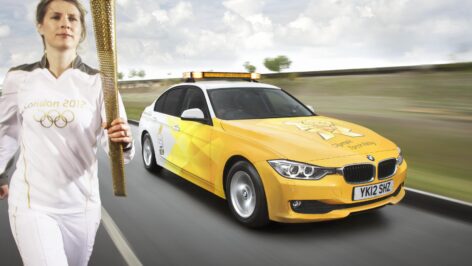
LOCOG and BMW, Official Automotive Partner to the London 2012 Olympic and Paralympic Games, today revealed full details of the London 2012 fleet. Set to play an essential role in delivering a successful Games, LOCOG’s deployment plans for the low-emission, diesel, hybrid and electric cars, motorcycles and bicycles were unveiled for the first time.

Whether it be pulling boats out of the water at Weymouth, providing a mobile camera platform for the marathon, towing a horse ambulance across Greenwich Park or carrying medal winners around the Olympic Park to media interviews, the BMW and MINI fleet will perform an extremely wide range of duties during the Olympic and Paralympic Games.

Naturally making sure the right people are in the right place at the right time, across more than 30 venues in London and beyond, is another key role of the cars, motorcycles and bicycles which constitute the fleet. Media will be users of the fleet, as well as judges, event organisers, Games officials and staff, ranging from medical officers, IOC photographers and crew to official rights holders and technical delegates.

Richard George, Transport Director, LOCOG said: “From motorcycles to electric vehicles and 4x4s, the requirements of the 2012 fleet are hugely diverse. BMW and MINI have provided a variety of different cars, ideal both for city driving and long distance, to travel to Olympic and Paralympic venues around the country. It was vital that our partner in this field could deliver a one-stop shop solution and meet our sustainability targets. BMW has surpassed our requirements and we are delighted to be working with them.”

LOCOG’s challenging average fleet emissions target of 120 grams CO2 per kilometre was set significantly below the UK total new car emissions average of 138 grams CO2 per kilometre / 54.2mpg. (Ref. CleanGreenCars.co.uk) The BMW and MINI fleet surpasses the target with average CO2 emissions of 116 grams CO2 per kilometre or 64.5mpg.

Chris Brownridge, UK Marketing Director, BMW said: “Our London 2012 fleet shows what BMW technology can achieve today in terms of fuel economy and low emissions, including the first major presence of super clean EU6-compliant cars on UK roads. We look forward sharing our vision of sustainable urban mobility during the Games, including our revolutionary electric vehicle technology at the BMW Group Pavilion in the Olympic park.”

Beyond the vehicle requirements, BMW Group is supporting a significant number of Team GB and ParalympicsGB members and hopefuls. More than 140 individuals around the country are receiving backing in the form of vehicles, support and encouragement.

In addition, the technical facilities of BMW Group were put to good use to help test the Olympic Torch ahead of its 70 day Olympic Relay around the UK. The company’s state-of-the-art Energy and Environmental Test Centre in Munich was used to test the torch in all manner of different weather conditions, from 5ºC to +40ºC temperatures, +50mph winds, snow and driving rain.

BMW – Glasgow

BMW – Glasgow

If you are a franchise or independent dealership you can benefit from putting your business on the map.

Along with information on your sales, aftersales, parts and bodyshop services you can also promote your news, sales and events throughout the year with us.

We will publish your news, the latest features on your staff, customers, cars, events or sales, increase your brand awareness and web presence.

Your features will be spread across the internet, included in related articles on a network of 75,000 websites, included in the motoring section of a news portal with 3 million users a month and included in social media and search engines.

Links will be created in these articles to your web pages and combined with your business information here, your website will increase its visibility through both local and national searches.

There is no limit ot the information you provide us, include as many images as you  like – you can even include video!

For more information or to add your automotive business just contact us now.

    Your Name (required)

    Company Name (required)

    Company Address (required)

    City (required)

    Zip / Postcode (required)

    Your Email (required)

    Your Business Logo - for map location - we can provide one if you are unable
    File type .png - size 100x100 would be ideal

    Choose your Business Category - you can tick more than one box

    If "Other" what category would you describe your business?

    Add your business information below - unlimited copy
    Include any social media accounts and webpage links

    Your website address - you can include more than one

    Upload any images - we an provide library images if required


    The new BMW M6 Coupe and M6 Convertible officially shown

    The new BMW M6 Coupe and M6 Convertible officially shown

    BMW have now officially shown taken the new M6 Coupe and M6 Convertible that will go on sale later this year.

    The new BMW M6 Coupé and M6 Convertible models represent the most recent expression of the BMW M philosophy, having sold over 14,000 examples of the previous generation worldwide.

    Powered by the latest V8 M TwinPower Turbo engine producing 560hp, these bold 6 Series flagship models offer searing performance and sporting dynamics, combined with supreme long-distance touring manners and everyday usability.  With near 50:50 weight distribution and optimised aerodynamics the latest BMW M6 offers an intense M experience.

    Thanks to BMW’s EfficientDynamics technologies and the range of measures this incorporates, the new M6 is both cleaner and 30 per cent more fuel-efficient than its predecessor, despite being significantly faster and more powerful.

    Bespoke M design, a driver-focused cabin and cutting edge in-car technology, makes the new M6 the most desirable yet, whether ordered with the lightweight carbon-fibre roof or the elegant retractable soft top.

    Model Power
    hp
    Torque
    Nm
    0-62mph
    Seconds
    Top Speed
    Mph
    Combined Mpg CO2 Emissions g/km
    BMW M6 Coupé 560 680 4.2 155* 28.5 232
    BMW M6 Convertible 560 680 4.3 155* 27.4 239

    *  Electronically limited

    Expressive design with a sporty edge from BMW M

    The classical proportions and elegant design of the current 6 Series Coupé and Convertible have won many admirers since their introduction. Now BMW M gives them a sporty, dynamic update, with aggressive design features defined by the technical considerations of the engineering team. The need for appropriate cooling air, the revised chassis and the pursuit of aerodynamic excellence: all have dictated the creative approach of the designers. The result is bold and powerful with an aggressive stance.

    At the front a new M apron with wide air-intake apertures provides the necessary cooling for the engine, while sharply contoured headlamps featuring the characteristic BMW Corona rings shine brightly thanks to the latest Adaptive LED headlight technology. The new M kidney grille, with its black slats and shape inspired by the double spoke alloy wheels, enhances the front end.

    To the side, a 30mm increase in the front track has resulted in a significant swelling of the front wheel arches, with the familiar M gills behind them featuring chrome flares and indicator bars with the M logo. At the rear, the now-traditional twin pairs of exhaust pipes sit either side of the aerodynamically optimised diffuser.

    The new M6 comes as standard with 19” Star-spoke forged alloy wheels featuring seven double spokes in a two-tone finish. Optional 20” alloy wheels, with five double spokes hinting at the weight saving their lightweight design provides, are also available.
    The BMW M6 Coupé once again uses a carbon-fibre reinforced plastic roof panel, lowering the car’s centre of gravity and improving handling agility as a result. In addition, the dark colour of the roof elongates the silhouette of the car when viewed in profile, something that’s further exaggerated by the BMW High-gloss Shadowline trim around the side glass.

    The M6 Convertible features the same high quality retractable roof as the 6 Series Convertible, with its ‘fin’ architecture projecting into the rear section, enhancing the silhouette of the car. The heated vertical glass rear window retracts independently of the roof itself. Operation of the roof is via a button on the centre console, and it can be raised and lowered at anything from a standstill to speeds of up to 25mph. Just 19 seconds is all it takes to lower the roof; 24 seconds to raise it once again. Buyers can choose from Black, Beige or Anthracite Silver fleck for the roof material colour.


    TwinPower Turbo technology for the most powerful M6 ever

    The new BMW M6 Coupé and M6 Convertible are equipped with the same high-revving, turbocharged V8 engine as the M5 Saloon. This revolutionary powerplant not only produces 53hp more than its ten-cylinder predecessor at 560hp, but it also benefits from a greatly improved torque output over a broad band of revs. It’s this 680Nm, available from as low as 1,500rpm to 5,750rpm, that not only gives the new M6 its stunning outright acceleration, but also its commanding flexibility on-road.

    The key to this impressive performance is BMW’s M TwinPower Turbo technology, incorporated on the M6 via twin turbochargers built in to the twin scroll principle, including a cross-bank exhaust manifold. This sophisticated, 4.4-litre engine also includes direct fuel injection, VALVETRONIC variable valve timing and Double VANOS continuously variable camshaft control, all of which help it to rev to 7,200rpm – unusually high for a turbocharged engine.

    The result is a 0-62mph sprint of just 4.2 seconds for the M6 Coupé, with the M6 Convertible following at 4.3 seconds. Both versions have a top speed limited to 155mph.

    This marked increase in performance has gone hand in hand with significant improvements to fuel consumption and emissions. With the adoption of BMW’s

    EfficientDynamics technology, the efficiency of the V8 M TwinPower Turbo engine is further improved by Auto Start-Stop, Brake Energy Regeneration and Active Aerodynamics amongst others, helping to reduce consumption and emissions by approximately 30 per cent.  The new BMW M6 Coupé has a combined fuel consumption of 28.5mpg (Convertible 27.4mpg) with CO2 emissions of 232g/km (Convertible 239g/km). Moreover, with an increased fuel tank size of 80 litres, the new BMW M6 offers excellent touring range.

    Seven speeds for ultimate gearbox efficiency

    The new BMW M6 models use BMW M’s latest seven-speed Double Clutch Transmission (M DCT) with DRIVELOGIC. This advanced transmission features two oil-cooled ‘wet’ clutches, offering near-seamless shifts. The DRIVELOGIC control offers three separate shift programs, both in automatic and manual modes, providing the driver with the best of both worlds whether they are looking for the sportiest selection of gears or driving comfort. M DCT also includes a Launch Control function, while in manual mode gears can be changed via either the M gear selector or via paddles on the M Sport steering wheel.

    The M DCT gearbox is part of an advanced powertrain that also includes the M-Differential. This electronically controlled multi-plate limited slip differential ensures the best possible traction at all times, with a locking factor from 0-100 per cent. As with many of the other systems on the new BMW M6, it is linked into the car’s Dynamic Stability Control (DSC) system to ensure maximum driving safety.

    M-specific chassis for the most demanding of drivers

    BMW’s M division has worked tirelessly on the chassis of the new M6, and the result is a sporting car that combines tremendous ability for high performance driving with everyday usability. Drawing on their vast collective experience and legendary back catalogue, the M engineers have combined their knowledge with the latest technology, honing it over an extensive testing period.

    To meet the expectations of the most demanding drivers, the rear axle subframe has been bolted directly to the body, the front axle kinematics redesigned with M-specific settings, and a number of 6 Series suspension components replaced with forged aluminium items. The electro-hydraulically controlled dampers feature BMW’s Variable Damper Control (VDC) with a choice of three settings, so that drivers can tailor the suspension of the M6 to best suit their driving style and environment at any given moment.

    The new M6 is steered via a hydraulic rack and pinion system, with a variable ratio to increase low-speed agility while offering outstanding stability at speed. M-specific Servotronic power steering offers ideal weighting for the driver, with a choice of three settings for further personalisation.

    BMW’s sophisticated Dynamic Stability Control (DSC) uses many of the cars electronic systems – such as ABS, CBC and DBC – to provide an effective safety net. However, drivers can select the M Dynamic Mode (MDM) that overrides the basic settings, allowing for greater wheel slip and even more sporty driving characteristics.

    Personalisation of driver settings via the M buttons

    The settings for the DSC, the engine characteristics, DDC, Servotronic and M DCT DRIVELOGIC can all be adjusted via the buttons on the centre console or from within the BMW iDrive system. However, drivers can also assign particular configurations to the ‘M1’ and ‘M2’ buttons located on the steering wheel. This way, for example, the driver can store a ‘sporty’ set up and a ‘comfort’-biased set up that can be accessed immediately at the touch of button.

    M Carbon Ceramic Brakes

    The new BMW M6 Coupé and M6 Convertible feature as standard a powerful braking system with 400mm front discs and 396mm rear discs, gripped by six-piston callipers on the front axle that can be identified by their dark blue metallic finish.

    However, for the first time buyers can choose the latest optional M Carbon Ceramic Brakes, with front discs measuring 410mm in diameter and 396mm on the rear axle. This powerful new braking system offers even better resistance to heat and a reduction in the rotational masses by 19.4kg. The matte gold finish on the brake callipers identifies cars equipped with these outstanding brakes.

    The body structure: strength by design

    In addition to the aforementioned carbon-fibre reinforced plastic roof the new M6 benefits from a hybrid construction of steel, aluminium and composite materials to give an immensely strong platform that’s remarkably light. In addition to the high strength steels used in the monocoque, the doors and bonnet are fashioned in aluminium while the front wings are formed in plastic. The boot lid, and the roof cover on the convertible, are made from an SMC fibreglass material.

    With robust load path structures, large and precisely engineered deformation zones and the latest restraint systems, the new M6 has been engineered with safety as a priority.

    In the cabin: sporting luxury

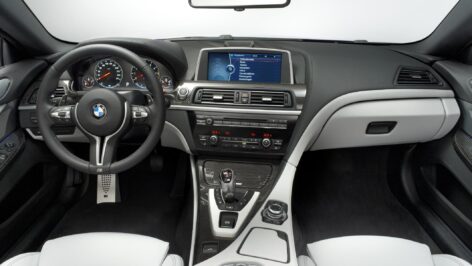
    As the ultimate expression of the BMW M ethos, the interior of the new M6 Coupé and M6 Convertible is a blend of luxury appointments and sporting intent. The new M Sport seats, a lightweight design, feature an integrated seat belt system, electric seat adjustment, a pneumatic lumbar adjustment and manually adjustable under thigh support. Active head restraints also feature, and the M logo embossed into the shoulder area is the finishing touch.

    The cockpit is finished in fine grain extended Merino leather, with the dynamic styling of the 6 Series interior particularly suited to the role of an M car. There’s more space too, and 460 litres of luggage capacity, 300-350 litres in the M6 Convertible depending on whether the roof is raised or lowered, an increase over its predecessor.

    The driver’s environment is particularly sporty, with an instrument facia featuring the latest Black Panel technology, M dials with red needles and white instrumentation and

    the M logo. Should the driver raise their eyes they’ll see the M-specific Head-Up Display (HUD) with its digital speedometer readout and speed limit identification, gear and rev counter and shift lights.

    Extensive standard equipment and personalisation options

    The new BMW M6 offers a particularly high level of standard equipment. In addition to the advanced mechanical package that the car offers, the M6 driver enjoys two-zone climate control, heated and multi-adjustable M Sport seats, the M-specific HUD, Extended Merino leather interior trim and BMW Professional Navigation with 10.2” colour screen. Customers can then further personalise their cars with an upgrade to 20” alloy wheels, M Carbon Ceramic Brakes, Internet, BMW Night Vision and a Bang and Olufsen Advanced audio system.

    The new M6 Coupé and Convertible goes on sale in the UK on 15 September 2012, with the Coupé costing £93,795 and the Convertible £98,995.

    Ends

    The BMW Group

    The BMW Group is one of the most successful manufacturers of automobiles and motorcycles in the world with its BMW, MINI, Husqvarna Motorcycles  and Rolls-Royce brands. As a global company, the BMW Group operates 25 production and assembly facilities in 14 countries and has a global sales network in more than 140 countries.

    In 2011, the BMW Group sold about1.67 million cars and more than 113,000 motorcycles worldwide. The profit before tax for the financial year 2010 was euro 4.8 billion on revenues amounting to euro 60.5 billion. At 31 December 2010, the BMW Group had a workforce of approximately 95,500 employees.

    The success of the BMW Group has always been built on long-term thinking and responsible action. The company has therefore established ecological and social sustainability throughout the value chain, comprehensive product responsibility and a clear commitment to conserving resources as an integral part of its strategy. As a result of its efforts, the BMW Group has been ranked industry leader in the Dow Jones Sustainability Indexes for the last seven years.

    The new range of BMW M Performance cars

    The new range of BMW M Performance cars

    The new BMW M GmbH product range offers customers more ways to experience Sheer Driving Pleasure with an even sharper sporting edge. The BMW M Performance Automobiles stand out with their exceptionally powerful engines, enhanced agility and precision handling, their emotion-laden design and unrestricted everyday practicality, and their impressive efficiency given the performance on offer. All are based on current BMW models, BMW M GmbH using its vast pool of expertise to carry out carefully targeted technical and design modifications.

    The premiere of the BMW M Performance Automobiles heralds the creation of a new category of car, one which marks out the sporting potential of the latest BMW models in particularly vivid style. Getting the ball rolling for the new breed are a quartet of inspirational models linked most significantly by a newly developed six-cylinder in-line diesel engine. Three turbochargers, maximum output reaching 280 kW/381 hp and peak torque of 740 Newton metres (546 lb-ft) provide a punchy introduction.

    Without parallel worldwide, the new engine gives the BMW M550d xDrive Sedan, BMW M550d xDrive Touring, BMW X5 M50d and BMW X6 M50d performance figures head and shoulders above those of the diesel models currently topping their respective model series. The new M Performance TwinPower Turbo technology lays on a significant increase in output and torque across an extremely wide rev range. And yet despite this enhanced power delivery, fuel consumption and emissions figures in the EU test cycle are almost unchanged.

    Unique engine, customary M set-up.
    The further optimised combination of driving pleasure and efficiency provides fresh evidence of the outstanding development expertise on hand at BMW M GmbH in terms of powertrain technology. However, it is the typically harmonious interplay of powertrain, chassis technology and design that gives BMW M Performance Automobiles their innovative and distinctive character. An eight-speed Sports automatic gearbox and the intelligent all-wheel-drive system BMW xDrive – tuned to suit each individual model – team up with detailed modifications to chassis components and light-alloy wheels developed exclusively for the BMW M Performance Automobiles to deliver driving characteristics imbued with agility and precision. Precisely controllable handling properties reflect the expertise and experience of BMW M GmbH in the development of high-performance sports cars.

    The familiar M style is also expressed through the cars’ bespoke body design, which takes its cues from the aerodynamic demands of driving at the dynamic limit. And the BMW M Performance Automobiles also boast an interior very much in keeping with the purposefully sporty driving experience.

    Premiere: six-cylinder in-line diesel engine with three turbochargers.
    The market launch of the first BMW M Performance Automobiles also sees the premiere of the most powerful diesel engine ever fitted in one of the brand’s models. The new unit shows BMW demonstrating its commitment to the development of ultra-sporty yet impressively efficient diesel powerplants. Globally unique technological highlights open the door to a new dimension in power development. The six-cylinder in-line engine developed for the BMW M Performance Automobiles uses its 2,993 cc displacement to generate maximum output of 280 kW/381 hp, giving the new diesel unit a specific output of 93.6 kW/127.3 hp per litre of displacement. No less imposing is the engine’s maximum torque of 740 Newton metres (546 lb-ft), all of which the driver will find on tap as low down as 2,000 rpm.

    Playing a central role in this increase in power is M Performance TwinPower Turbo technology. For the first time, a BMW engine will feature three turbochargers. The size, arrangement and interplay strategy of the turbos are designed to guarantee maximum power delivery across a wide rev band. The system comprises two relatively small turbochargers and one large turbo, which join forces precisely to deliver the amount of power required. According to the driving situation, the low moment of inertia of the small turbochargers is exploited to the full to deliver razor-sharp responses, while the link-up with the large turbo is maximised to generate as much charge pressure as possible.

    This innovative and globally unique multi-stage turbocharging concept represents a particularly efficient method of boosting output. In addition, the efficiency of the new diesel engine is further optimised by innovations including a new development stage in common-rail direct injection technology, featuring piezo injectors working with maximum pressure of 2,200 bar. The impressive quantity and quality of the technical innovations on hand complement the unrivalled development expertise of BMW in the development of diesel engines. The new powerplant strikes the most effective balance between output and fuel consumption of any series-produced unit of its kind.

    The BMW M550d xDrive: a new benchmark in sporty driving pleasure and efficiency in the BMW 5 Series segment.
    The unique properties of the new six-cylinder diesel engine play a key role in enabling the BMW M Performance Automobiles to redefine the relationship between driving pleasure and economy – and therefore ensure the BMW M550d xDrive and BMW M550d xDrive Touring act as extremely effective advertisements for BMW EfficientDynamics technology in the BMW 5 Series segment. These models embody a particularly high-level application of the principle of increased performance coupled with ultra-low fuel consumption and CO2emissions. The typically M interpretation of the BMW 5 Series’ characteristics also allows drivers to experience the harmony of sporting capability and ride comfort, fascination and everyday usability in extraordinary depth.

    Both the Sedan and Touring models prove more impressively than ever that the hallmark pulling power of a diesel engine can be converted into inspirational driving dynamics. The BMW M550d xDrive Sedan accelerates from 0 to 100 km/h (62 mph) in 4.7 seconds, while the BMW M550d xDrive Touring covers the same sprint in 4.9 seconds. The two models showcase the efficiency benefits of diesel technology equally convincingly. In the EU test cycle the Sedan records fuel consumption of just 6.3 litres per 100 kilometres (44.8 mpg imp), the Touring 6.4 l/100 km (44.1 mpg imp). CO2 emissions are 165 grams per kilometre for the BMW M550d xDrive Sedan and 169 g/km for the BMW M550d xDrive Touring. Both models also meet the requirements specified by the EU6 exhaust standard.

    Model-specific modifications governing power transfer, chassis and design enable a textbook M conversion of engine output into sporty driving pleasure. The standard-fitted eight-speed Sports automatic transmission comes with gearshift paddles on the steering wheel and is given model-specific settings, enabling even more rapid gear changes and helping the engine’s performance characteristics to be exploited to the greatest possible degree. Meanwhile, BMW xDrive improves the cars’ cornering dynamics, as well as enhancing traction and directional stability. The electronic all-wheel-drive system follows a control strategy tailored to each model. This allows the threat of understeer in extremely dynamic driving situations to be counteracted by adjustments to the power split, without the DSC (Dynamic Stability Control) system linked up to xDrive having to intervene. Meanwhile, the air channelling properties, handling and appearance of both BMW M550d xDrive variants benefit from aerodynamically optimised body elements at the front and rear, Ferric Grey exterior mirrors and air intake bars, and exclusive 20-inch light-alloy wheels (available as an option).

    The BMW X5 M50d and BMW X6 M50d: an imposing presence in both the acceleration and efficiency rankings.
    Outstanding powertrain and chassis technology in combination with xDrive intelligent all-wheel drive allow the BMW X5 Sports Activity Vehicle and BMW X6 Sports Activity Coupe to display extraordinary poise and assurance. The BMW M Performance Automobiles based on the two BMW X models take these character traits to a whole new level. Thanks to the most powerful diesel engine in the BMW engine range, allied to the optimised power transfer, handling properties and aerodynamic balance for which M cars are renowned, the BMW X5 M50d and BMW X6 M50d set new standards in their respective classes in terms of sportiness, conceptual harmony and efficiency.

    With its maximum output of 280 kW/381 hp and peak torque of 740 Newton metres (546 lb-ft) the engine developed for the BMW M Performance Automobiles also brings a level of performance to the two BMW X models which no other diesel-powered car in their segments can match. The BMW X5 M50d accelerates from 0 to 100 km/h (62 mph) in 5.4 seconds, the BMW X6 M50d in just 5.3 seconds, while average fuel consumption in the EU test cycle stands at 7.5 litres per 100 kilometres (37.7 mpg imp) for the Sports Activity Vehicle and 7.7 l/100 km (36.7 mpg imp) for the Sports Activity Coupé – only slightly above the figures for the existing diesel variants of the two models. CO2 emissions are 199 grams per kilometre for the BMW X5 M50d and 204 g/km for the BMW X6 M50d.

    The eight-speed Sports automatic transmission with enhanced gearshift dynamics and the xDrive all-wheel-drive system – tuned to suit the individual model and emphasise the traditional rear-wheel set-up of BMW cars – transfer drive to the road with characteristic élan. Chassis technology which has likewise been modified using BMW M GmbH expertise ensures that the hallmark agility of BMW X models is geared even more intently to enhancing sporting capability. The BMW X5 M50d and BMW X6 M50d also underline their dynamic tendencies in the form of model-specific body features, which optimise both the supply of cooling air for the engine and the cars’ aerodynamic properties. 19-inch (BMW X6 M50d: 20-inch) M light-alloy wheels are also fitted as standard on these models. 20-inch light-alloy wheels in Ferric Grey developed exclusively for the BMW M Performance Automobiles can be specified as an option. Plus, Ferric Grey metallic exterior mirror caps and air intake bars – another distinguishing feature of BMW M Performance Automobiles – give the cars an even more individual visual appearance.

    BMW M Performance Automobiles: using outstanding expertise to increase driving pleasure – a tried-and-tested concept.
    The development of high-performance sports cars with bespoke powertrain and chassis technology, stand-out design and interior features and model-specific cockpit controls and displays represents the core area of business of BMW M GmbH. The expertise required to fulfil this brief is rooted in decades of experience in the conception of racing cars, which initially constituted the sole focus of BMW Motorsport GmbH following the company’s founding in 1972. However, it was not long before this expertise was also being used to satisfy the demands of drivers with sporting pretensions for more power in their road cars. The first BMW 5 Series models were duly equipped with suitably modified powertrain and chassis technology in the mid-1970s.

    In 1980 an additional BMW 5 Series model was unveiled for the first time; the BMW M535i boasted a significant increase in output (to 160 kW/218 hp) and modifications to the chassis, brakes, gearbox and rear differential. Also developed on the basis of the second-generation BMW 5 Series was the BMW M535i, which was on sale from 1984 to 1987 – alongside the BMW M5 following its 1985 launch. With its extra power moulded flawlessly into dynamic excellence and stand-alone stylistic identity headlined by aerodynamically optimised body components, the BMW M535i provided full-blooded driving pleasure yet also unhindered day-to-day usability. It marked the realisation of a concept whose success was rooted primarily in the harmony between powertrain, chassis and design achieved by BMW M GmbH, and which has now been revived in a fresh new form with the BMW M Performance Automobiles.


    At a glance.

    • New BMW M GmbH product range based on current BMW models; BMW M Performance Automobiles complement the model family with their clear focus on sports performance combined with unrestricted everyday usability and outstanding efficiency; new product category launches with four models: BMW M550d xDrive Sedan, BMW M550d xDrive Touring, BMW X5 M50d and BMW X6 M50d.
    • Rigorous use of BMW M GmbH development expertise in the optimisation of agility, precision and emotion; BMW M Performance Automobiles with harmonious interplay of powertrain, chassis technology and design features typical of M models; exclusive, extremely powerful engine; detailed modifications to chassis technology and power transfer; aerodynamically optimised body.
    • World premiere for a new six-cylinder in-line diesel engine developed exclusively for the BMW M Performance Automobiles; new, globally unique M Performance TwinPower Turbo technology: three turbochargers, common-rail direct injection with piezo injectors and maximum injection pressure of 2,200 bar; 3.0-litre displacement, 280 kW/381 hp, maximum torque: 740 Newton metres (546 lb-ft); instantaneous responses and outstandingly dynamic power delivery into the upper reaches of the rev range; maximum revs: 5,400 rpm; impressively economical thanks to optimised efficiency and extensive BMW EfficientDynamics technology, including Auto Start-Stop function and ECO PRO mode.
    • Eight-speed Sports automatic transmission with enhanced gearshift dynamics fitted as standard on all BMW M Performance Automobiles; BMW xDrive intelligent all-wheel drive with bespoke set-up optimised to enhance dynamics; BMW M550d xDrive and BMW X5 M50d with Performance Control, BMW X6 M50d with Dynamic Performance Control.
    • M-specific tuning of suspension, bodyshell mounting, engine and transmission mounting, springs and dampers, all standard and optional chassis control systems, and the Servotronic mapping for the hydraulic steering; result is significantly enhanced agility and precision in dynamic driving situations, with the linear build-up of lateral forces familiar from M cars.
    • BMW M550d xDrive comes as standard with the Driving Experience Control switch, including ECO PRO mode; BMW M550d xDrive Touring also features air suspension on the rear axle and automatic self-levelling; both models available as an option with Dynamic Damper Control and Adaptive Drive including anti-roll control.
    • BMW X5 M50d and BMW X6 M50d fitted as standard with air suspension on the rear axle and self-levelling, Adaptive Drive standard on the BMW X6 M50d and available as an option for the BMW X5 M50d.
    • Purposeful design modifications in familiar M style set individual models apart and provide aerodynamic optimisation; exterior mirrors and air intake bars with striking Ferric Grey metallic paintwork; trapezoidal exhaust tailpipes; BMW Individual High-gloss Shadow Line; 19-inch M light-alloy wheels in double-spoke design standard on the BMW M550d xDrive and BMW M550d xDrive Touring; 19-inch M light-alloy wheels in V-spoke design standard on the BMW X5 M50d; 20-inch M light-alloy wheels in double-spoke design standard on the BMW X6 M50d; exclusive 20-inch M light-alloy wheels in Ferric Grey available as an option for all models; model lettering on the door sills, boot lid and, in the case of the BMW X5 M50d and BMW X6 M50d, also in the instrument cluster; engine cover with “M Performance” badge.
    • Bespoke interior design shows clear emphasis on the cars’ sporting character; gearshift lever with M logo; exclusive Alcantara/Nappa leather M sports seats in Black (BMW X5 M50d, BMW X6 M50d) or Alcantara/Cloth in Grey Shadow (BMW M550d xDrive) with contrast stitching and embossed M logo; M leather steering wheel with gearshift paddles; BMW Individual roof liner in Anthracite; interior trim strips in Brushed Aluminium Shadow (BMW X5 M50d, BMW X6 M50d) or Aluminium Hexagon (BMW M550d xDrive); interior sound design adds further emphasis to the characteristic six-cylinder soundtrack.
    • All BMW M Performance Automobiles contain a wide range of comfort-enhancing equipment as standard; extensive individualisation possible thanks to virtually full availability of BMW 5 Series, BMW X5 and BMW X6 options; includes Comfort Access, automatic tailgate operation (standard in Germany on the BMW X6 M50d and BMW M550d xDrive Touring), hands-free tailgate opening (BMW M550d xDrive, BMW M550d xDrive Touring), electrically operated glass/panoramic sunroof, doors with Soft Close Automatic function, trailer coupling, heated steering wheel, active seats, Adaptive LED Headlights (BMW X6 M50d), navigation systems with hard disk storage, high-quality audio and rear-seat entertainment systems.
    • Wide range of driver assistance systems and mobility services from BMW ConnectedDrive unmatched by any rival: Head-Up Display, Adaptive Headlights, High-Beam Assistant, BMW Night Vision with pedestrian recognition (BMW M550d xDrive), Active Cruise Control with Stop & Go function, Lane Change Warning System (BMW M550d xDrive), Lane Departure Warning System (BMW M550d xDrive), rear-view camera with Top View (BMW X5 M50d, BMW X6 M50d), Surround View (BMW 550d xDrive), Speed Limit Info, internet access, extended integration of smartphones and music players, Real-Time Traffic Information and apps for receiving web radio and using Facebook and Twitter.
    • Engine: Six-cylinder in-line diesel engine with M Performance TwinPower Turbo technology, aluminium crankcase, three turbochargers (high-pressure, with variable turbine geometry), common-rail direct injection with piezo injectors, maximum injection pressure: 2,200 bar. Displacement: 2,993 cc, output: 280 kW/381 hp at 4,000 – 4,400 rpm, max. torque: 740 Nm (546 lb-ft) at 2,000 – 3 000 rpm, specific output: 93.6 kW/127.3 hp per litre of displacement.
    • BMW M Performance models: performance figures, fuel consumption, CO2 emissions:
      BMW M550d xDrive Sedan:
      Acceleration [0 – 100 km/h (62 mph)]: 4.7 seconds,
      top speed: 250 km/h (155 mph),
      average fuel consumption: 6.3 litres/100 kilometres (44.8 mpg imp),
      CO2 emissions: 165 g/km, exhaust standard: EU6.
      BMW M550d xDrive Touring:
      Acceleration [0 – 100 km/h (62 mph)]: 4.9 seconds,
      top speed: 250 km/h (155 mph),
      average fuel consumption: 6.4 litres/100 kilometres (44.1 mpg imp),
      CO2 emissions: 169 g/km, exhaust standard: EU6.
      BMW X5 M50d:
      Acceleration [0 – 100 km/h (62 mph)]: 5.4 seconds,
      top speed: 250 km/h (155 mph),
      average fuel consumption: 7.5 litres/100 kilometres (37.7 mpg imp),
      CO2 emissions: 199 g/km, exhaust standard: EU5.
      BMW X6 M50d:
      Acceleration [0 – 100 km/h (62 mph)]: 5.3 seconds,
      top speed: 250 km/h (155 mph),
      average fuel consumption: 7.7 litres/100 kilometres (36.7 mpg imp),
      CO2 emissions: 204 g/km, exhaust standard: EU5.
    BMW 640d Sport Coupe

    BMW 640d Sport Coupe

    When we tested the BMW 650 Sport in the USA we loved it – a very useful, roomy convertible with plenty of power and easy to drive around New York City and on the wet open roads of Pennsylvania.

    Now BMW have launched the next generation 6 Series and Autocar have given the 640d Sport it’s 90 second car review.

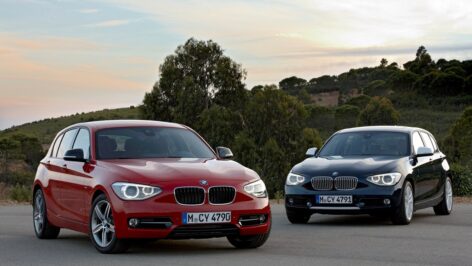
    BMW 1 Series wins 5 stars in Euro NCAP crash test

    BMW 1 Series wins 5 stars in Euro NCAP crash test

    BMW are celebrating as their new 1 Series has obtained 5 stars in the Euro NCAP crash test. The 1 Series has been a popular model – we even had one for a while at MotoringChat – powerful yet compact while offering that BMW driver feeling. Coupled with the smaller range of diesel engines from BMW, the range have been powerful yet economic. Their only real complaint from the first generation was the lack of rear legroom.

    Now in its second generation, the BMW 1 Series is once again the undisputed benchmark for driving dynamics in the compact vehicle segment. Just a few weeks after its market launch it has now been officially certified as a perfect role model in the area of safety. On the current Euro NCAP crash test, the new BMW 1 Series achieved the top score of 5 stars. After analysis of all the data collected in the course of extensive testing procedures, the testers officially confirmed that the new BMW compact model provides outstanding occupant protection over a range of different collision types.

    In addition, the car’s pedestrian protection and its numerous standard safety fittings also attracted a positive rating. Among other things, the new BMW 1 Series can be fitted with the extended emergency call including automatic position finding and accident severity identification – the BMW Assist Advanced eCall. BMW received the special Euro NCAP Advanced Award for this BMW ConnectedDrive service a year ago.

    The current Euro NCAP crash test determined the risk of injury as a result of a frontal impact and side impact collision as well as on the so-called side-impact pole crash. In all scenarios the new BMW 1 Series provided both driver and passengers with extensive protection from injury, regardless of their height or seating position. The test verdict on child safety was also positive. The BMW 1 Series was said to offer excellent protection on both the front impact and the side impact tests.  In conjunction with seat systems for children aged three and one and a half, the test dummies with mounted sensors registered a stable position and reduced head movement at the moment of impact.

    The effective seat occupant protection in the new BMW 1 Series is the result of an integrated safety concept which includes not just an extremely torsionally stiff passenger cell but also large-format deformation zones and precisely defined bearing structures to absorb and dissipate the forces which take effect when an accident occurs.

    The new BMW 1 Series is fitted as standard with front airbags, side airbags integrated in the backrests, head airbags for the front and back seats, three-point automatic seatbelts on all seats, belt force limiters and belt tensioners at the front and ISOFIX children’s seat attachments at the rear. It also features the driving stability system DSC (Dynamic Stability Control) and a Run Flat Indicator.

    The Euro NCAP crash test attaches particular importance to pedestrian protection, and this has been optimised in the new BMW 1 Series by such elements as selectively modelled body elements with yielding structures on the front of the vehicle. The testers awarded maximum points to the design of the front bumpers in particular, as well as for those elements of the front section which are relevant to the risk of head injury to children in the event of a collision.

    The Euro NCAP (New Car Assessment Programme) is recognised throughout Europe by governments, automobile clubs and consumer organisations as a benchmark of vehicle accident safety. By achieving the top score, the BMW 1 Series repeats the result of its predecessor model which was also awarded 5 stars in 2004. Since then the demands of the Euro NCAP have been raised significantly with the introduction of additional test criteria.

    Since the extension of the test program in 2009, all BMW models to have undergone the Euro NCAP crash test have scored the top rating. So following the BMW X1, the BMW 5 Series and the BMW X3, the new BMW 1 Series is the brand’s fourth new model to emerge from the revised, much more demanding test with a result of 5 stars.

    Drifting a Porsche Cayman R and BMW 1-series M Coupe sideways

    Drifting a Porsche Cayman R and BMW 1-series M Coupe sideways

    CAR have put a Porsche Cayman R up against the BMW 1-series M Coupe on road in north Wales, and on track around Anglesey race circuit.

    Have you tried either of these cars? What do you think of them?

    BMW to star with Tom Cruise in Mission Impossible Ghost Protocol

    BMW to star with Tom Cruise in Mission Impossible Ghost Protocol

    BMW is back in Hollywood!

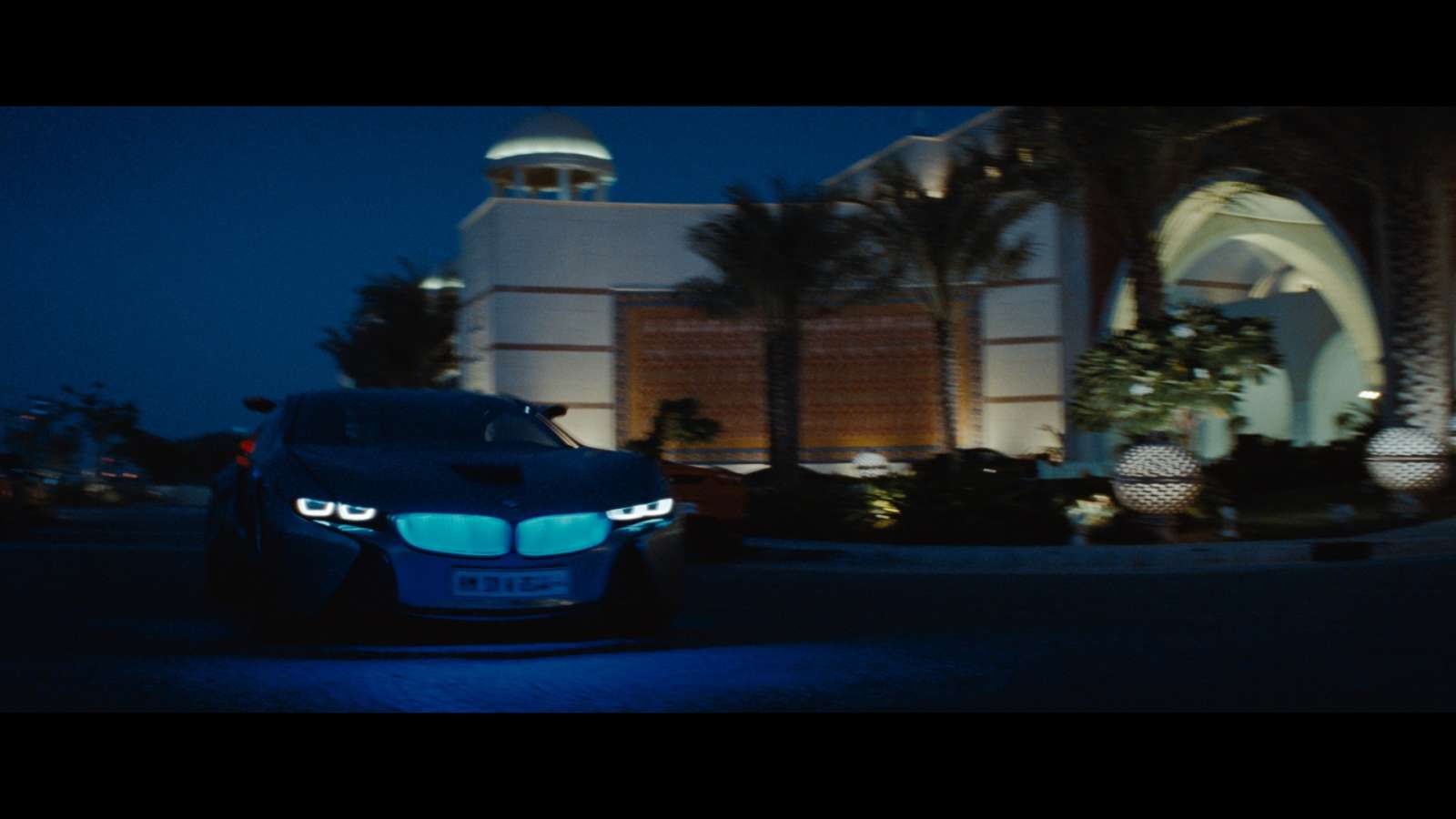
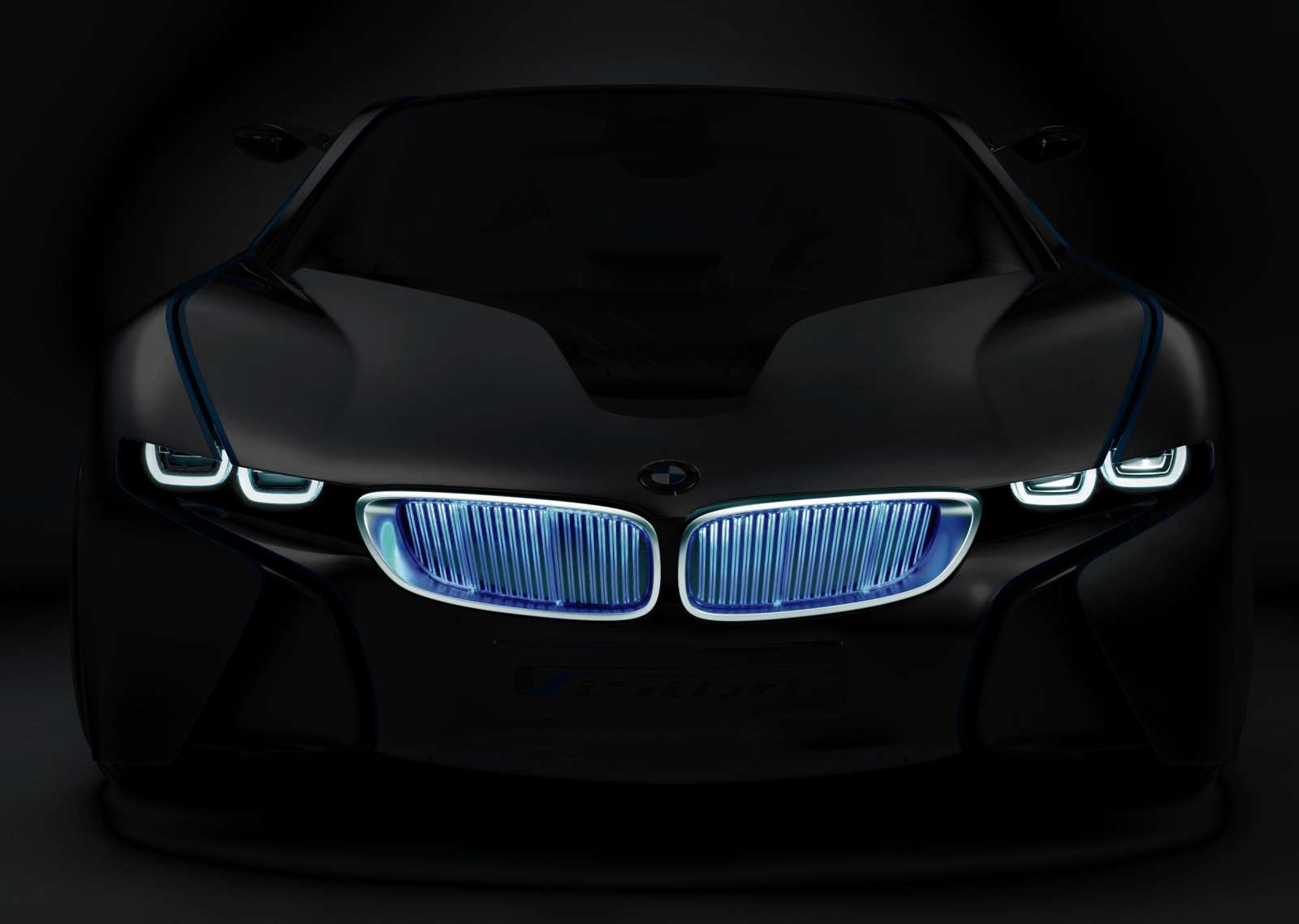
    BMW Vision Efficient Dynamics Concept car is back in Hollywood with Tom Cruise in Mission Impossible Ghost Protocol

    BMW today announced their participation in the upcoming Paramount Pictures release “Mission: Impossible – Ghost Protocol” as the film’s main automotive partner with their latest BMW car taking a starring role.

    BMW Concept car is back in Hollywood with Mission Impossible Ghost Protocol

    High performance with fewer emissions is the name of the game for this new movie. One of the BMW vehicles provided for Tom Cruise´s next film is the BMW Vision EfficientDynamics concept car. It has been recognized as having the most sophisticated technology and the most striking design among the current concept electric supercars. In a few years the BMW i8, which was inspired by the BMW Vision Efficient Dynamics concept vehicle, will enter BMW production.

    BMW Vision Efficient Dynamics concept stars in Mission Impossible Ghost Protocol

    “We are thrilled to be involved again in another Hollywood Blockbuster,” said Ian Robertson, BMW AG Board Member for Sales and Marketing. “The BMW Group leads the way in developing future mobility with a focus on sustainability. One great example is the BMW Vision EfficientDynamics concept car which will be presented in the film. With its futuristic design and large glass surfaces, the car offers a fascinating perspective on the future of sheer driving pleasure – in combination with maximum efficiency. Also with BMW ConnectedDrive technology, it is the perfect car for Ethan Hunt to outsmart his pursuers through narrow streets and busy city traffic.”

    Having provided vehicles for outstanding film projects, TV productions, etc. for more than 75 years, entertainment marketing is firmly established as an important building block for the BMW Group’s long-term image and product communications.

    BMW car is back in Hollywood with Mission Impossible Ghost Protocol

    “Mission: Impossible – Ghost Protocol”, directed by Brad Bird, is scheduled for release mid of December 2011.

    BMW bring old and new to Goodwood Festival of Speed

    BMW bring old and new to Goodwood Festival of Speed

    The fifth generation of the world’s most successful performance saloon, the BMW M5, will be seen for the first time at The Goodwood Festival of Speed 1-3 July 2011. The new car will make its UK debut in the BMW pavilion along with a selection of the Bavarian manufacturer’s hottest current cars and some famous racing cars celebrating anniversaries from its glorious heritage.

    For more than 25 years the BMW M5 Saloon has defined the high-performance saloon. The new model raises the concept of the premium executive saloon, combining track-car dynamics and supreme touring comfort to an even higher level.

    It features the most potent engine ever devised by BMW’s high-performance M division along with race-bred chassis technology that includes, for the first time, an Active M differential and electronic damping control. The unique exterior design has been dictated by the technical requirements of the car, while the luxurious sports car-like cockpit offers an extensive range of innovative driver assistance systems and mobility services.

    BMW M5 Saloon makes UK debut at Goodwood Festival of Speed

    For the first time an M5 features a turbocharged power unit ­– a high-revving 4.4-litre (4395cc) V8. Developing 560hp from 5750-7000rpm, it is the most potent series-production engine ever to emerge from BMW’s high-performance M division. Incorporating the company’s M TwinPower Turbo technology, twin-scroll turbochargers, high-precision direct fuel injection, VALVETRONIC variable valve control and a cross-bank exhaust manifold, it guarantees the legendary BMW M-car thrust with seamless lag-free delivery from little more than tickover speed – thanks to 680Nm of torque from only 1500rpm.

    Compared with the previous V10-engined M5, maximum power is up by around 10 per cent and peak torque by more than 30 per cent. As a result, the latest M5 can accelerate from 0-62mph in just 4.4 seconds, and 0-124mph in only 13 seconds. The voluntarily limited top speed is 155mph.  With BMW’s seven-speed M Double Clutch Transmission Drivelogic and Efficient Dynamics technology, including engine Auto Start-Stop and Brake Energy Regeneration, the M5’s fuel consumption has been reduced by more than 30 per cent to 28.5mpg, while CO2 emissions tumble to 232g/km.

    The new M5 Saloon will be available in the UK in November 2011, priced at £73,040 on-the-road.

    Joining the M5 on the BMW pavilion will be TV and radio star, Vernon Kay, who will be available for interviews and to sign autographs on the Friday.  On both Saturday and Sunday, the BBC’s expert anchor for Formula 1 coverage, Jake Humphreys, will be on stand too. He will be joined by legendary Formula 1 commentator, Murray Walker.

    Le Mans ace Dirk Müller to drive the BMW Z4 GT3

    Straight from the Le Mans 24 Hours, and a podium finish for BMW Motorsport, Dirk Müller will drive the BMW Z4 GT3 against the clock on the famous Goodwood 1.16 mile hillclimb.

    Müller achieved third place for the BMW M3 GT in the GTE class at the 79th staging of the Le Mans 24 Hours, along with fellow drivers Andy Priaulx and Joey Hand. In the hard-fought LM GTE class, the number 56 BMW M3 GT crossed the finish line at the “Circuit de la Sarthe” after 313 thrilling laps and having covered a distance of over 4,200 kilometres.

    Dirk Müller clocked the fastest GTE race lap with a time of 3:58.876 minutes in the race, which was at times dramatic and overshadowed by several spectacular and alarming crashes.

    Le Mans ace Dirk Müller to drive the BMW Z4 GT3 at Goodwood Festival of Speed

    The BMW Z4 GT3, which competes in the FIA GT3 European Championship, has proven to be competitive, with a one-two finish at the first race of the year in Portimão in May 2011. It had already secured outright victory at the Dubai 24 Hours, earlier in the year, its first ever win in a marathon race of this scale.

    The BMW Z4 GT3 was launched in March 2010 and, with its elongated bonnet, driver’s compartment towards the rear of the car, long wheel base and narrow wheel arches, boasts an unmistakable appearance. The difference between the road-going production and racing car can be found under the bonnet: while the production version of the BMW Z4 is driven by a six-cylinder engine, the GT3 car is powered by a 4.4-litre eight-cylinder engine.

    Icons sharing an anniversary 50 years apart

    Goodwood will host two significant anniversaries for cars that can boast the title of icon in the pantheon of the great cars of automotive history – the BMW 328 and the M3.

    Both these cars, separated by 50 years of automobile history, share characteristics that have helped elevate them to the highest platform of four wheel nirvana.  Both appeared on the race circuits before they were widely available to the public;  both dominated their competitors on the great race circuits of the world;  both were designed for racing first and for the road later;  both were feted by the motoring journalists of their day and both are still revered as milestone cars.

    To celebrate the 328’s 75th anniversary, a beautiful and truly historic example will ascend the famous Goodwood hill on Friday, Saturday and Sunday. The BMW 328 Kamm Coupé, named after the German aerodynamics pioneer Wunibald Kamm, and recreated by BMW Classic, comes to Goodwood for the first time.

    BMW 328 and M3 – icons share an anniversary 50 years apart

    Five BMW 328 models contested the 1940 Mille Miglia, but the Kamm Coupé disappeared without trace in1953. With the 70th anniversary of BMW’s famous Mille Miglia victory fast approaching, BMW Classic reproduced this legendary racing car to take part in the 2010 race and to highlight an important milestone in both motor sport history and the development of vehicle aerodynamics.

    To mark the 25th anniversary of the M3 going on sale in the UK, a BMW M3 Group A DTM will be driven up the hill by one of the UK’s best ever international racing drivers, Steve Soper.

    BMW 328 – racing heritage

    The BMW 328 first appeared at the 1936 Eifelrennen held on 14 June at the daunting Nurburgring.  A single example driven by Ernst Henne started the race among a field of larger sports cars but proved its agility and performance by totally dominating the event at an average speed of 101.5kmh over the tortuous 70 mile race.

    Built between 1936 and 1940 a mere 464 examples of the 328 were made but its innovative engine formed the backbone of many post-war racing engines under the Bristol name.  It powered countless racing machines including those of Cooper, Frazer Nash and Veritas, as well as a whole generation of 1950s sporting road cars including Bristol and the AC Ace right up until the early 1960s, a full 25 years after its debut.

    The 328 won its class in just about every race in the classic sports car calendar of the day – the Le Mans 24 Hours, Tourist Trophy and the Mille Miglia included.  In total it won 141 victories from 172 starts in national and international races.  At its zenith, special streamlined 328 roadsters and a coupé built by Superleggera Touring of Milan raced in the 1940 Mille Miglia and finished first, third, fifth and sixth, the winners covering the 1,000 miles at an average speed of 104mph.

    As befits a car that is prized among collectors, top quality BMW 328s are today valued at close to half a million Pounds.

    The road-going M3 started a racing trend

    Although the M3 made its public debut at the 1985 Frankfurt Show, customer deliveries did not start until late in 1986, and it didn’t reach the UK until 1987 and then only in left hand drive.  Customers started to read about the new M3 in motoring journals which to a man proclaimed the tactility, agility and performance to be quite unlike anything before in its class.

    The E30 M3 made its racing debut at Monza in March 1987 and took the first six places in the race, until all were disqualified for insufficient roof metal thickness.  Its major competitor, the Ford Sierra RS Cosworth, was also excluded for homologation discrepancies. These two cars, piloted by a panoply of touring car driver greats, battled out the next two seasons – the M3 using finesse and poise, the Sierra punching out much higher power from its turbocharged motor.

    The results presaged the reasons why the M3 would be held in such awe.  Roberto Ravaglia won the 1987 and only World Touring Car Championship (until it made its return in 2005), the M3 winning five of the season’s races, while Winnie Vogt won the European series with the M3 winning all but one round.  1988 was the same with Ravaglia winning the European series again.  In the Donington Park race, M3s finished first to eighth unmolested.

    BMW M3 GTS to storm the hill at the Goodwood Festival of Speed

    The M3 is the most successful racing car of all time winning a huge number of races and over 40 championships between 1987 and 1992.  But it was not only a winner in sprint events.  It won the Nurburgring 24 Hours three times and the Spa 24 Hours four times.  The M3 was versatile too.  It won the Corsican round of the 1987 World Rally Championship – a car developed and entered by Prodrive, the company responsible for the MINI John Cooper Works WRC that made its WRC debut in 2011 – and will also go up the hill at Goodwood for the first time this year.  The M3 still races today in GT2, Le Mans, ALMS and the Intercontinental Cup.

    M3 GTS to storm the hill

    The M3 story was brought right up to date this year with the introduction of the BMW M3 GTS, the most powerful version of the high-performance M3 Coupé.

    The car, only available in Fire Orange, will bring a frisson of colour and brightness to the Sussex countryside, as it steers its way up Goodwood’s hill in the super car run.

    The M3 GTS features a 450hp engine that offers the ideal preconditions for use at club sport events, while still being road-legal. In addition to a larger and more powerful V8 engine, exclusive tuning of the seven-speed M Dual Clutch Transmission with DRIVELOGIC and modified suspension technology, the M3 GTS has also been specifically optimised with regard to aerodynamics and lightweight construction.

    The sporting potential of the BMW M3 GTS is underlined by a power-to-weight ratio that has been lowered to 3.4kgs per hp. Featuring a transmission and suspension configuration which has been optimised for the racetrack, the BMW M3 GTS accelerates from zero to 62mph in a mere 4.4 seconds. The car covers the standing kilometre in just 22.5 seconds before going on to a 190mph top speed.

    Limited production of the BMW M3 GTS for the UK market in right-hand-drive form commenced in January, 2011, with all 15 examples now sold.

    BMW in the Moving Motor Show

    For only the second time, The Goodwood Festival of Speed will present the Moving Motor Show on Thursday 30 June.  This exclusive event enables participating manufacturers to invite selected customers, media and corporate clients to a privileged preview of the Festival and to drive production cars up the hill.

    This year, the new BMW 1 Series M Coupé and M3 Coupé will be action whilst at the BMW Moving Motor Show stand, the legendary M1 will be showcased with unique examples of BMW’s super sports car. This includes the BMW M1 Homage, built by the BMW Group Design team, to mark the 30th anniversary of the BMW M1 supercar and first shown at the Concorso d’Eleganza Villa d’Este 2008.

    Sitting alongside the Homage will be the BMW Turbo by Paul Bracq, a revolutionary concept car created for the 1972 Summer Olympics in Munich. The Turbo Concept was an extreme version of the M1. Like it, the Turbo had a low profile, mid-mounted engine, and long sloping nose with many unique touches including a more rounded front nose, gullwing doors, rear fender skirts and a more sculpted rear end.