logo
Renault celebrates 50 years of Alpine A110 with new concept car

Renault celebrates 50 years of Alpine A110 with new concept car

The Alpine Berlinette turns 50 this year and, to mark the event, Renault has created a concept car named Renault Alpine A 110-50, dedicated to performance and driving enjoyment.

So what’s in a name? In some cases, the heritage of a name is like a national treasure – and that’s certainly true for Alpine. Its DNA blends Renault’s sporting passion and technical expertise.

  • The Renault Alpine A 110-50 concept car translates the most characteristic design features of the original A 110 in a modern and spectacular way.
  • The carbon-fibre bodywork features a new shade of blue which refreshes and reinterprets the famous original ‘Alpine Blue’.
  • Produced with the renowned expertise of Renault Sport Technologies, the Renault Alpine A 110-50 concept car is imbued with the world of motorsport. It benefits from the experience gained from the Mégane Trophy race car by using the same technical platform.

“Developing this concept car was a great adventure. It was a catalyst for creativity. We wanted to make a Berlinette that was of our time, and which boldly embodies Renault’s passion for motorsport. We were guided by our hearts and emotions.” Axel Breun, Concept and Show Car Director.

The Renault Alpine A 110-50 concept car is fitted with a semi-automatic six-speed sequential gearbox, as well as a twin-plate clutch that can be controlled using either the clutch pedal or a paddle on the steering wheel.

The gearbox is fitted longitudinally behind the engine and incorporates a limited-slip differential (discs and ramps) with adjustable pre-loading. The cerametallic twin-plate clutch is also specific to the car. It is activated automatically when downshifting, guaranteeing fast and reliable gear changes.

Technical data

CHASSIS
            Type Tubular 25CD4S steel chassis with semi-load bearing engine and gearbox
BODYWORK Carbon
            Aerodynamic            features                          Front splitter, diffuser, rear wing
ENGINE
           Position Longitudinal, mid-rear
           Type Renault V4Y – 6 cylinders – 24 valves – 3,498cc
           Bore x stroke 95.5mm x 81.4mm
           Injection/ignition Magneti-Marelli Marvell 6R
           Maximum power 400hp at 7,200rpm
           Maximum torque 422Nm at 6,200rpm
           Maximum revs 7,500rpm
TRANSMISSION
           Type Rear-wheel drive
           Gearbox Six speeds + reverse – sequential
           Gear shift Semi-automatic (pedal-operated clutch and paddle)
           Differential Limited slip differential
           Clutch Cerametallic twin-plate 184mm-diameter clutch
SUSPENSION & BRAKES
           Suspension Double wishbones, adjustable two-way Sachs damper/spring assemblies, front anti-roll bar
           Front brakes Ventilated steel discs (Ø 356mm x 32mm) with six-piston AP Racing callipers
           Rear brakes Steel discs (Ø 330mm x 32mm) with four-piston AP Racing callipers
WHEELS & TYRES
            Wheels Aluminium alloy – Front: 8 x 21 / Rear: 9.5 x 21
            Tyres Michelin 245-35 x 21 (front) and 265-35 x 21 (rear)
DIMENSIONS, CAPACITIES           
            Length/width/height        4,330mm / 1,961mm / 1,230mm
           Front/rear track 1,680mm / 1,690mm
           Fuel tank 30 litres
           Kerb weight 880kg
          
2012 F1 season gets underway for Renault powered teams in Jerez

2012 F1 season gets underway for Renault powered teams in Jerez

Renaultsport F1’s preparations for the 2012 FIA Formula One World Championship stepped up as the first of the three pre-season tests got underway today at the Jerez Circuit, Spain. Each of Renault’s four partners, Red Bull Racing, Williams F1 Team, Caterham F1 Team and Lotus F1 Team, put their new 2012 challengers through their paces for the first time following individual media launches.

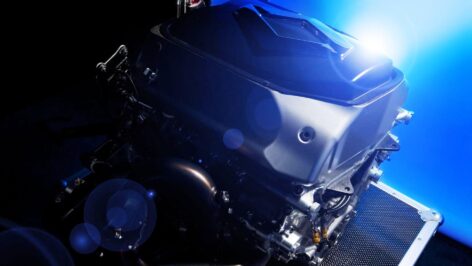
Each team will use identical specification RS27 V8 engines in the championship, prepared by Renault Sport F1 technicians in Viry-Châtillon, France. This year will be Renault’s 35th year of competition in F1, during which it has secured ten constructors’ titles and nine drivers’ titles.

Rob White, Deputy Managing Director (technical), Renault Sport F1:

”There are several interesting challenges facing Renaultsport F1 this year. Firstly, we have a fourth team to work with. That’s four chassis installations, and four sets of protocol to put in place. However, this has been dealt with excellently. We learnt from the experience of 2011 when we added a third team, and we put in place measures to ensure that there was no drop off in overall performance or service in doing so.”

“One of the main technical challenges this year is the adaptation of the engine to the new exhaust regulations, which state that the exhausts must be rear facing. This closes the loop hole on blown floors and, to a certain extent, returns to the exhaust specs used in 2010. It’s not been as simple as turning back the clock as the cars have evolved since then, as have the rules concerning torque maps and engine settings. We’ve had to rework the way we integrate the engine into the chassis and the packaging around it, and we’ve had to do this for four sets of exhaust.”

“The upside is that since the exhaust outlets have been reopened we will have a greater engine power output; this could be in the region of 10 – 20bhp more than 2011. As a result top speed on the straight is likely to be higher. It’s getting back to the real top end power of the engines we saw in 2009 before exhaust blowing became more widespread.”

“Allied to these changes, we have also made minor changes to improve reliability. Between seasons we have worked hard to optimise parts to give consistency across their life and, therefore to give consistency across all our engines, regardless of their mileage. This should allow us to deliver engines with a theoretical unlimited kilometre range within the tacit three races weekend per engine expectation, which will give us an advantage with flexibility with 20 races on the calendar this year.”

“In parallel, we are already well advanced in the design required for the new regulations in 2014 and are already dyno testing components before a full engine goes on the dyno in 2013.”

“We have a great deal to be optimistic about this year. It’s going to be busy, but hopefully a very satisfying year.”

Jean-François Caubet, Managing Director, Renault Sport F1:

”In 2010, when we formed Renaultsport F1, we returned to our core F1 activity of engine supply. This was principally for three reasons; one, to re-centre activities to give the biggest chance of success; two, to give a reduction in costs that could also be anticipated and three, to work on technologies that are road relevant.”

“We have, to date, satisfied all these aims. On a purely results level, obviously we are very happy. We won the championship with Red Bull last year, our tenth constructors’ title in a little over 30 years, and we were recognised for the quality of our product and service. . We are now putting in plans to exploit fully our involvement in F1 and we have put down some good foundations.”

“We are now very much looking forward to the 2012 season, which will see us add a fourth team to our fold. This adds to the efficiency of our investment, mitigates our exposure and ensures the sustainability of our presence in F1.”

“However, we are driven to satisfy each of our clients on an individual level: we recognise that each of our partner teams has different strategies and priorities and we try to address each as part of our service. We do not have a preferential policy towards any of our partners: we believe that competition between teams is healthy and beneficial for the overall performance and development of the engine, which is ultimately our aim this season.”


The Renault RS27 engine has been used in Formula 1 since the 2007 season. The V8, normally aspirated, 90° configuration unit is now capable of delivering up to 750bhp throughout its life.

The unit was recognised as one of the most reliable in the grid in 2011, able to complete over 3,000km with little power drop off.

Full engine specification

Designation: RS27-2012
Configuration: 2.4L V8
No of cylinders: 8
No of valves: 32
Displacement: 2400cc
Weight: 95kg
V angle: 90°
RPM: 18,000
Fuel: Total
Oil: Total
Power output: >750 bhp
Spark plugs: Semi surface discharge
Ignition system: High energy inductive
Pistons: Aluminium alloy
Engine block: Aluminium alloy
Crankshaft: Nitrided alloy steel with tungsten alloy counterweights
Connecting rods: Titanium alloy
Throttle system: 8 butterflies

Engine regulations for 2012

  • The V8, normally aspirated, 90° configuration with 18,000rpm output and 95kg weight limit has been applicable from the start of the 2007 season, but changes are permitted to improve chassis installation, to solve reliability issues or for ‘fair and equitable reasons’.
  • KERS is permitted but not obligatory. One fully charged unit can deliver up to 400kJ to give a max power equivalent to 60kW. This gives a powerboost of approximately 80bhp for between six and seven seconds per lap.
  • Eight engines are permitted per driver per season, even with 20 races on the calendar, one more than 2011.
  • Engine torque may only be generated through the steady application of the accelerator by the driver, and not through engine mapping or pre-programmed specific points along the accelerator pedal travel range.
  • This ‘accelerator pedal shaping map’ can only be used to fine tune the balance to the type of tyres fitted to the car, ie. the only changes permitted will be related to ‘dry’ or ‘wet’ settings.
  • So the engine is run in the most efficient way possible, any additional exhaust blowing will be prohibited this year.
  • Engine control must not be influenced by clutch position, movement or operation.
  • The idle speed control target may not exceed 5,000rpm.
  • Ignition, fuelling and throttle may not be used to artificially control the engine speed or alter the engine response in a rev range more than 1,000rpm below the final rev limit.
  • Engine exhaust systems may incorporate no more than two exits, both of which must be rearward facing tailpipes, through which all exhaust gases must pass.
  • The engine must be run in either an 8 or 4 cylinder mode. Any other patterns are no longer permitted.
The new 2012 Renault Scénic and Grand Scénic range revelaed

The new 2012 Renault Scénic and Grand Scénic range revelaed

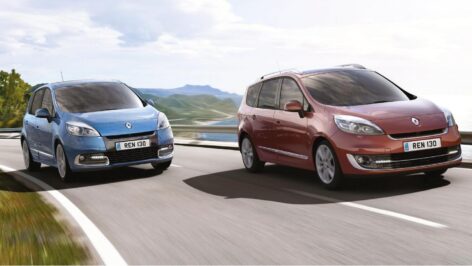
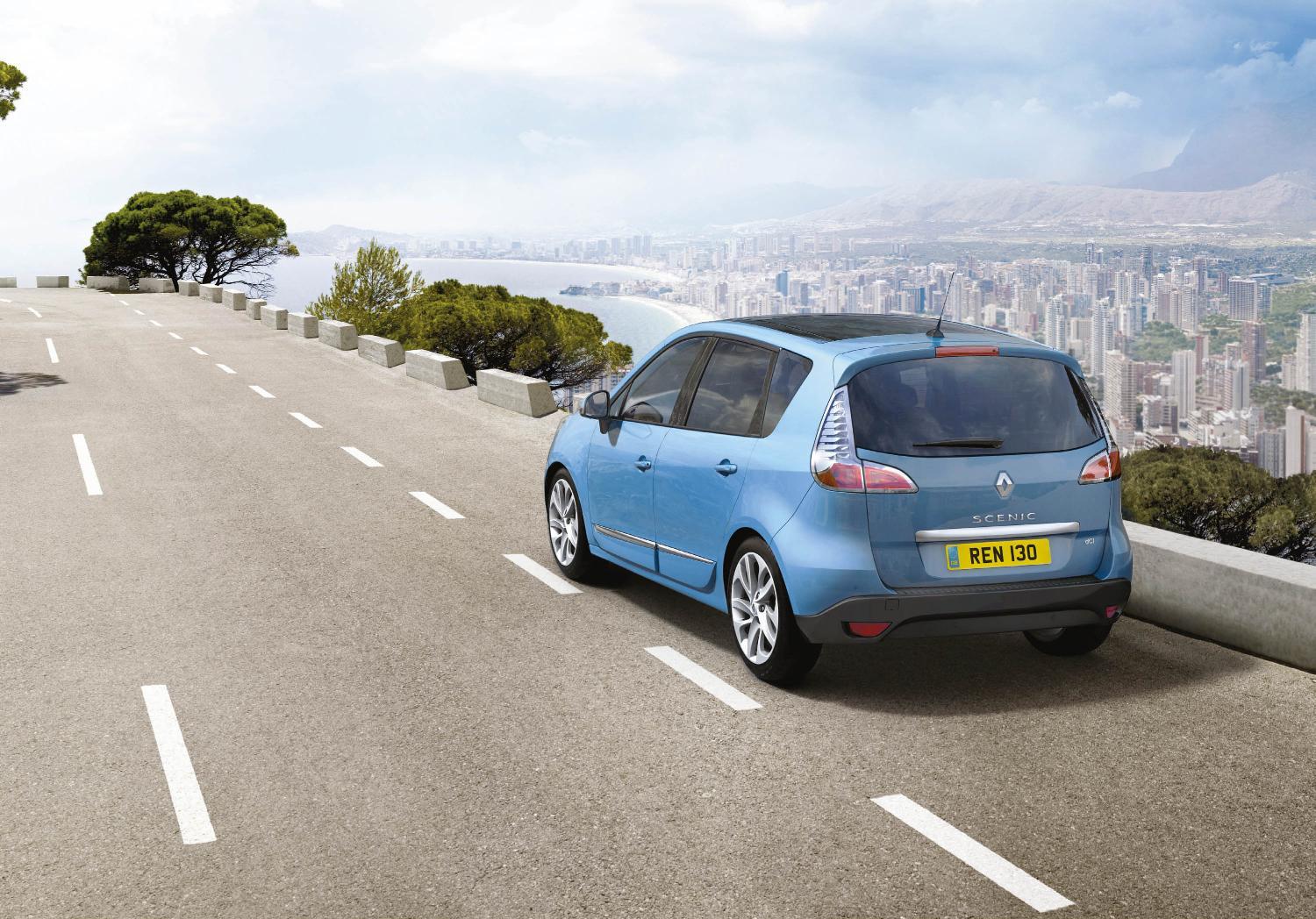
Renault have decided to show what we can expect next year with a little taste of the 2012 Scénic and Grand Scénic models.

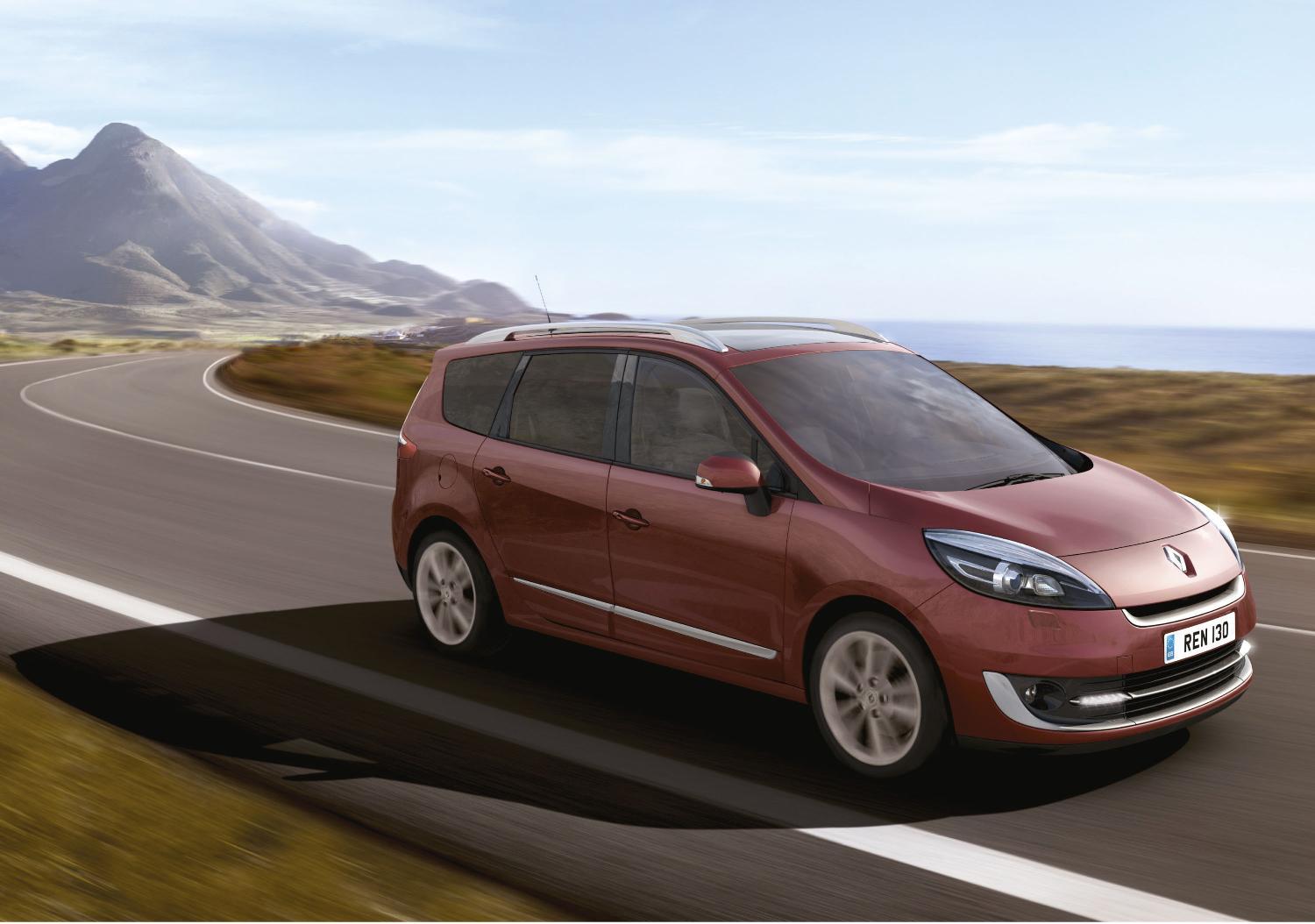
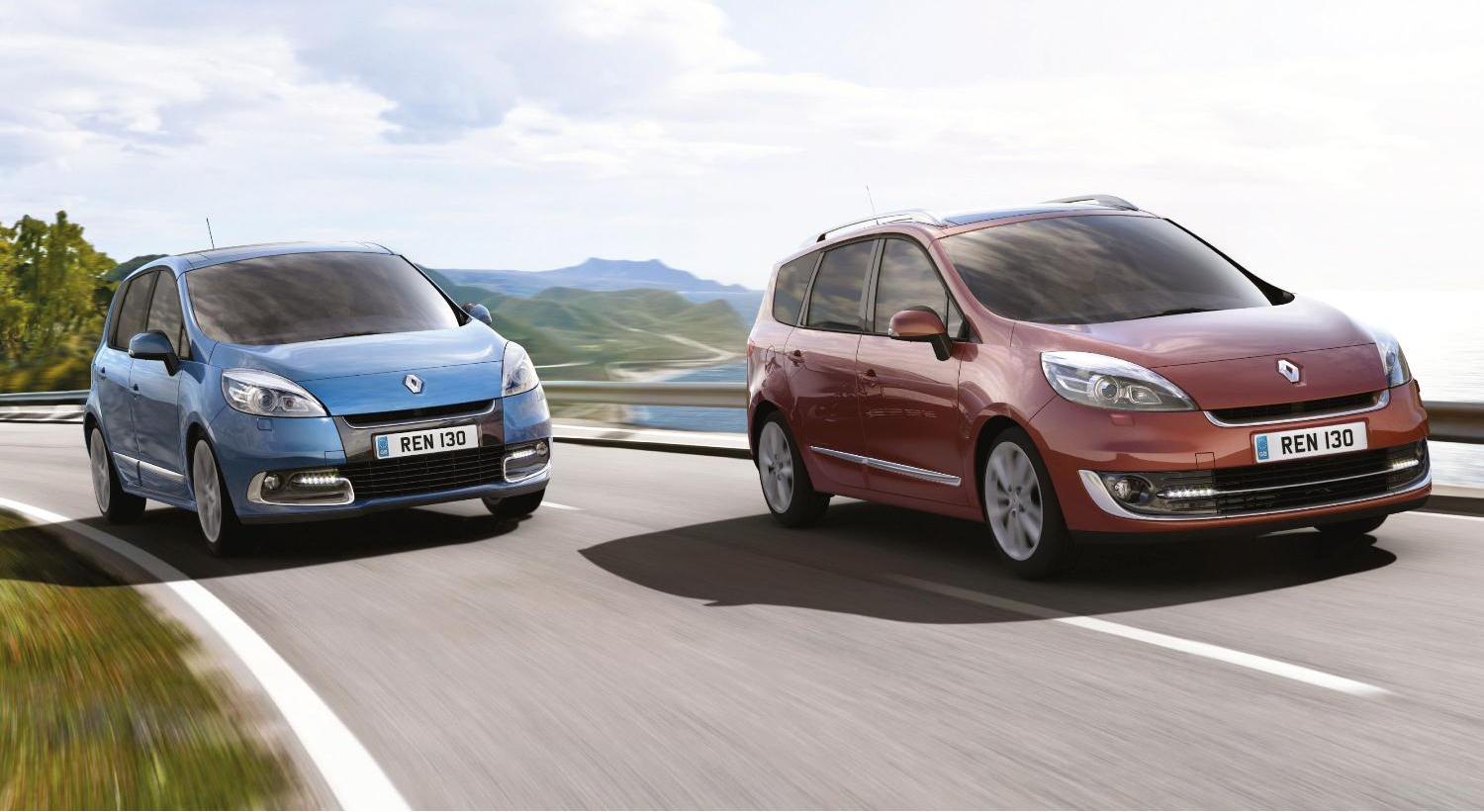
Ahead of its UK launch next February, Renault has released initial details for the freshly revitalised Scénic and Grand Scénic models for 2012, including sharper designs, the brand debut of two impressive downsized engines and numerous equipment enhancements.

Scenic 2012 – contemporary lines with a sharper look
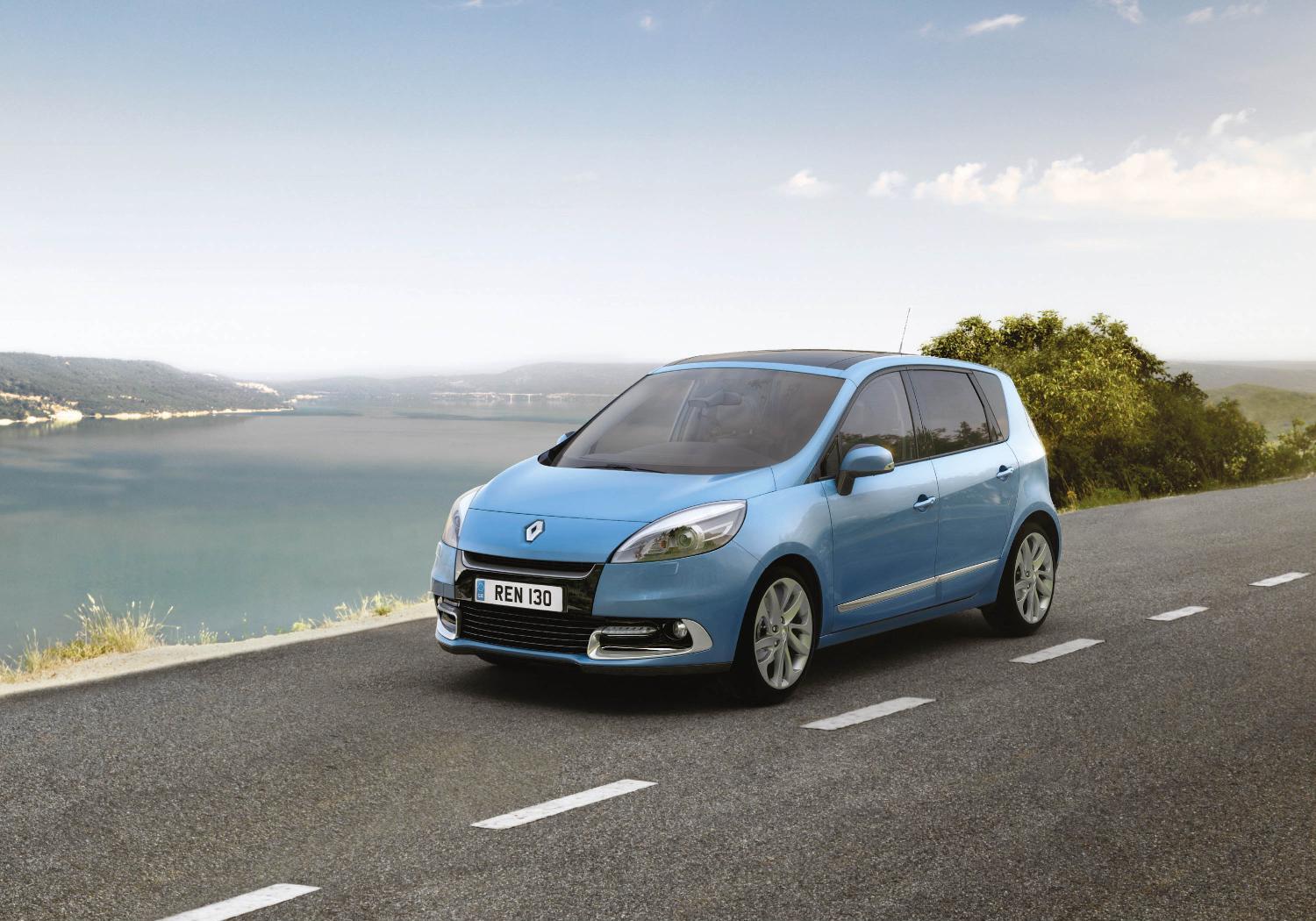
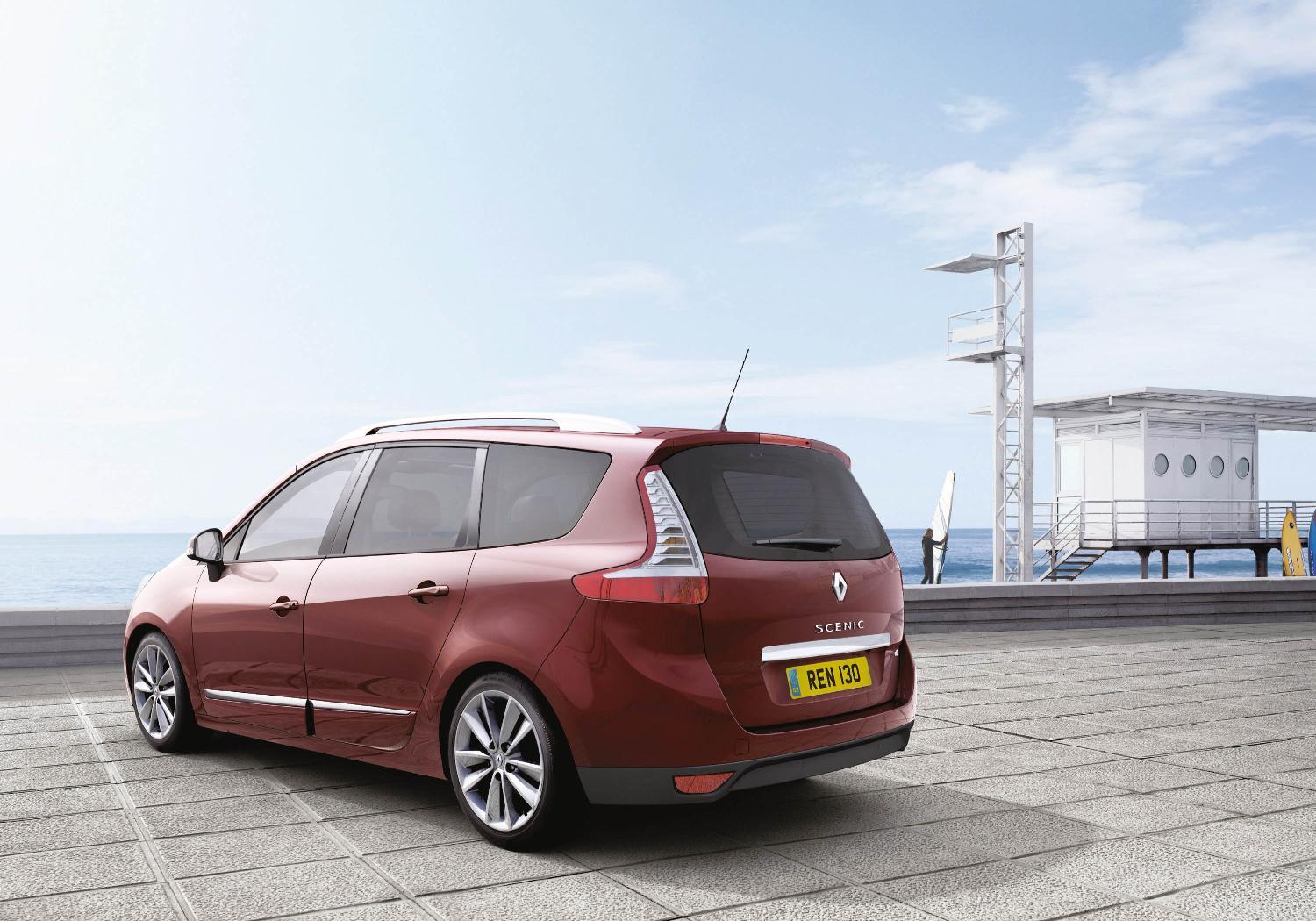
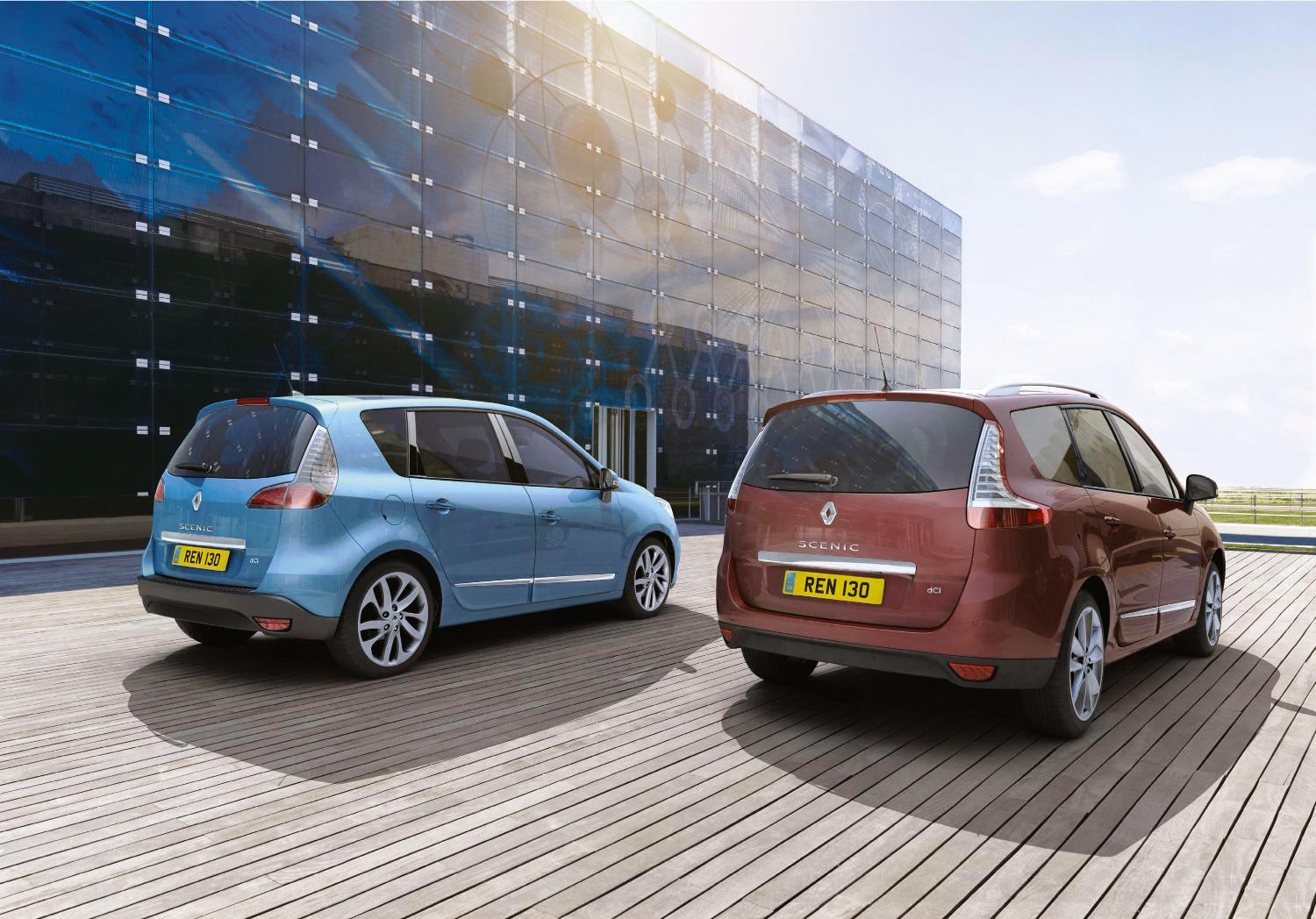
Since its summer launch in 2009, the fluid lines and generous interior dimensions of the two-model Scénic line-up have continued to attract a wide range of buyers. Just over two years on, Renault has sought to build on the appeal of Europe’s best-selling compact MPV, with a series of exterior upgrades. Among them are a revised front end which is both modern and status enhancing, while its new rear lights add a particularly dynamic touch.

The changes continue with the fitment of LED daytime running lights, gloss black features and chrome details (at the front, plus tailgate strip and side moulding strip), plus a new range of wheel trims and alloy wheels. Grand Scénic’s more contemporary front end provides a more imposing look. Two new body colours will also be available, Azzurro Blue and Damask Red.

New downsized engines for greater performance and fuel efficiency
Renault’s work on driving down emissions, combined with ever-improving fuel economy and performance through smaller cubic capacity engine innovation has borne more fruit. Following the trend begun by the petrol 1.4 TCe 130 and 1.5 dCi 110, and most recently the arrival of the 1.6 dCi 130, the world’s most powerful and frugal diesel engine of its size, Scenic welcomes two new engines. The first, 1.5 dCi 110 Stop & Start, is an enhanced version of the French marque’s core diesel engine. Benefitting from several clever technologies derived from Formula 1 (Stop & Start, brake energy regeneration), it combines record low CO2emissions of 105 grams per kilometre (reduced by 23g/km), and a 12 per cent saving in fuel consumption (up 11.3 mpg to 68.9), yet higher torque (260Nm at 1,750rpm; a gain of 20Nm) compared with the existing 1.5 dCi 110.

From spring 2012, the five- and seven-seater versions of Scénic will also be the first Renaults to receive the brand new 1.2 TCe 115 petrol engine. Due to gradually replace the 1.6 VVT 110, it offers low CO2 emissions (135g/km), 190Nm of torque (up 39Nm) and fuel consumption improved by a fifth, up 11.4 mpg to 49.6.

Joining them will be the highly acclaimed 1.6 dCi 130 Stop & Start, which itself boasts 20% better fuel consumption than its former 1.9 dCi 130 stablemate, together with greater performance and even lower emissions.

Thanks to these engines, Scénic and Grand Scénic will each play an important part in achieving Renault’s target to become Europe’s number one manufacturer with regard to the CO2 emissions of its range, without detracting from performance. They also highlight that the French brand’s proven powertrain excellence is still clearly evident as its relentless electric vehicle rollout begins in earnest.

Affordable technologies – improved comfort and a more reassuring ride
Enhanced everyday safety, making life for drivers as hassle-free as possible and maximising wellbeing for those on board continue to be priorities for Renault. Scénic and Grand Scénic will be the first Renault models to feature the Visio System by Renault which assists the driver’s vigilance and night-time vision thanks to two key functions. This latest innovation by the French brand combines a lane departure warning system (a camera detects if the drivers strays out of lane and triggers an audible signal) and an automatic headlight function (the same camera detects the lights of nearby vehicles and/or the presence of street lighting to automatically switch from dipped to main beam, and vice versa).

Driving and travelling comfort have been further enhanced by the addition of new features which come as standard equipment. As its name suggests, Hill Start Assist prevents the vehicle from rolling backwards when pulling away on a slope, while motorway-mode indicators warn other motorists when the driver is about to change lanes by flashing three times following a simple flick of the indicator stalk.

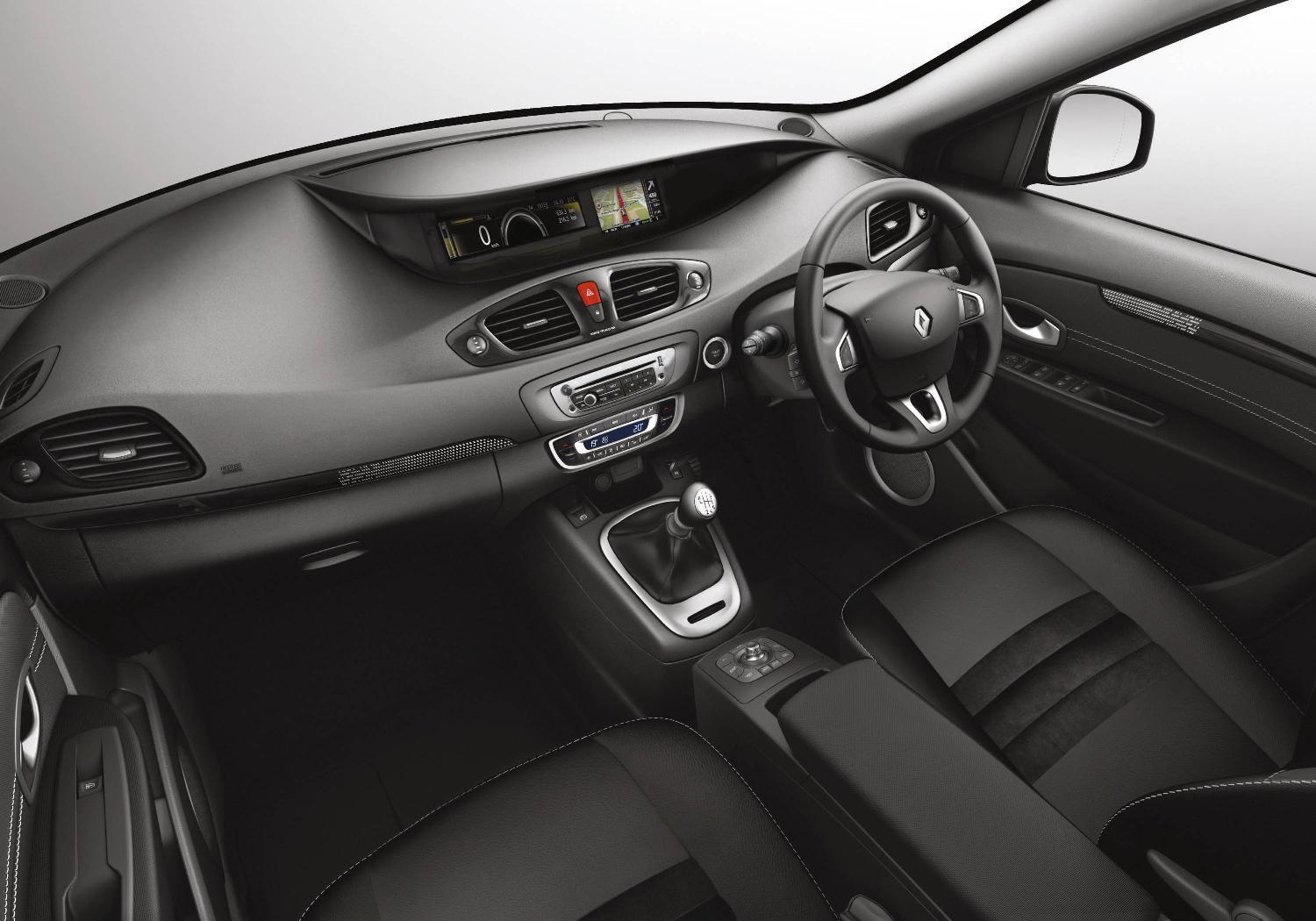
The 2012 versions of Scénic and Grand Scénic also carry over technologies that have helped forge the model’s success to date, from the tailor-engineered sound of the Bose® audio system to Carminat TomTom® navigation and associated LIVE services (HD Traffic, etc.).

Renault Scénic and Grand Scénic: Europe’s number one compact MPV
Scénic and Grand Scénic, are manufactured in Douai, in northern France, where they benefit from the most exacting production standards to guarantee the highest level of quality. Together, they top their segment in Europe, with sales in excess of 400,000 examples since the launch of the current generation at the end of 2009. Just shy of 3.9 million Scénics have found homes since it took the market by storm in 1996.

Further details on Scenic 2012 range pricing and specification will be released closer to launch. UK order books are set to open on 1st February 2012, ahead of first deliveries in March.