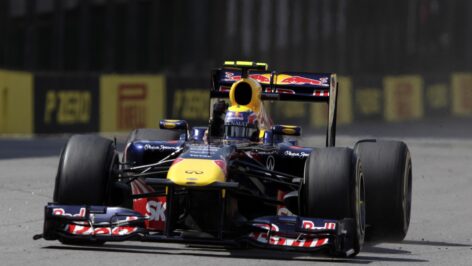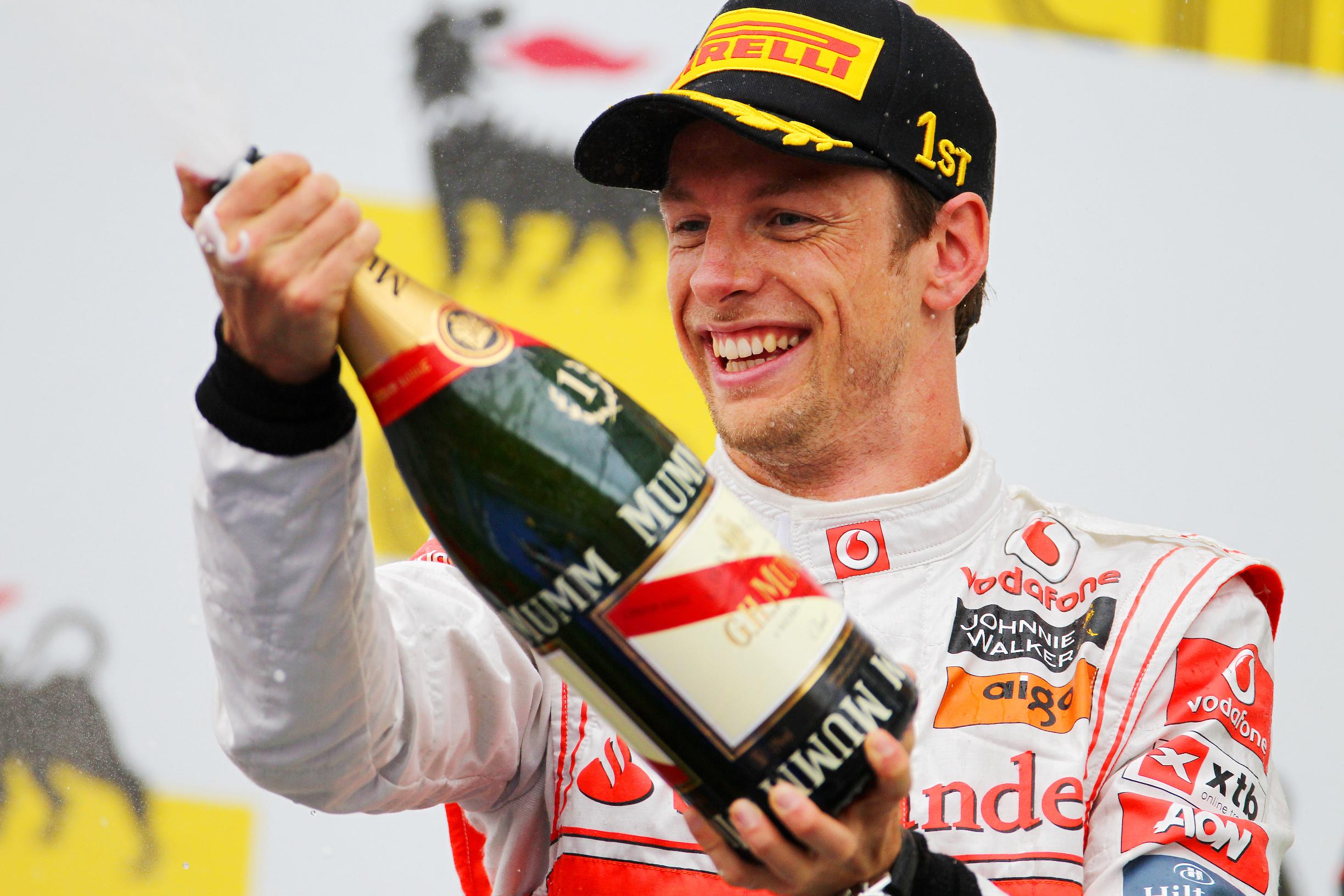
Renaultsport F1’s preparations for the 2012 FIA Formula One World Championship stepped up as the first of the three pre-season tests got underway today at the Jerez Circuit, Spain. Each of Renault’s four partners, Red Bull Racing, Williams F1 Team, Caterham F1 Team and Lotus F1 Team, put their new 2012 challengers through their paces for the first time following individual media launches.
Each team will use identical specification RS27 V8 engines in the championship, prepared by Renault Sport F1 technicians in Viry-Châtillon, France. This year will be Renault’s 35th year of competition in F1, during which it has secured ten constructors’ titles and nine drivers’ titles.
Rob White, Deputy Managing Director (technical), Renault Sport F1:
”There are several interesting challenges facing Renaultsport F1 this year. Firstly, we have a fourth team to work with. That’s four chassis installations, and four sets of protocol to put in place. However, this has been dealt with excellently. We learnt from the experience of 2011 when we added a third team, and we put in place measures to ensure that there was no drop off in overall performance or service in doing so.”
“One of the main technical challenges this year is the adaptation of the engine to the new exhaust regulations, which state that the exhausts must be rear facing. This closes the loop hole on blown floors and, to a certain extent, returns to the exhaust specs used in 2010. It’s not been as simple as turning back the clock as the cars have evolved since then, as have the rules concerning torque maps and engine settings. We’ve had to rework the way we integrate the engine into the chassis and the packaging around it, and we’ve had to do this for four sets of exhaust.”
“The upside is that since the exhaust outlets have been reopened we will have a greater engine power output; this could be in the region of 10 – 20bhp more than 2011. As a result top speed on the straight is likely to be higher. It’s getting back to the real top end power of the engines we saw in 2009 before exhaust blowing became more widespread.”
“Allied to these changes, we have also made minor changes to improve reliability. Between seasons we have worked hard to optimise parts to give consistency across their life and, therefore to give consistency across all our engines, regardless of their mileage. This should allow us to deliver engines with a theoretical unlimited kilometre range within the tacit three races weekend per engine expectation, which will give us an advantage with flexibility with 20 races on the calendar this year.”
“In parallel, we are already well advanced in the design required for the new regulations in 2014 and are already dyno testing components before a full engine goes on the dyno in 2013.”
“We have a great deal to be optimistic about this year. It’s going to be busy, but hopefully a very satisfying year.”
Jean-François Caubet, Managing Director, Renault Sport F1:
”In 2010, when we formed Renaultsport F1, we returned to our core F1 activity of engine supply. This was principally for three reasons; one, to re-centre activities to give the biggest chance of success; two, to give a reduction in costs that could also be anticipated and three, to work on technologies that are road relevant.”
“We have, to date, satisfied all these aims. On a purely results level, obviously we are very happy. We won the championship with Red Bull last year, our tenth constructors’ title in a little over 30 years, and we were recognised for the quality of our product and service. . We are now putting in plans to exploit fully our involvement in F1 and we have put down some good foundations.”
“We are now very much looking forward to the 2012 season, which will see us add a fourth team to our fold. This adds to the efficiency of our investment, mitigates our exposure and ensures the sustainability of our presence in F1.”
“However, we are driven to satisfy each of our clients on an individual level: we recognise that each of our partner teams has different strategies and priorities and we try to address each as part of our service. We do not have a preferential policy towards any of our partners: we believe that competition between teams is healthy and beneficial for the overall performance and development of the engine, which is ultimately our aim this season.”
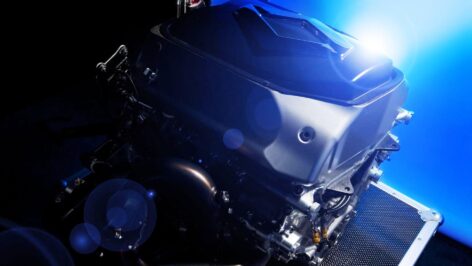
The Renault RS27 engine has been used in Formula 1 since the 2007 season. The V8, normally aspirated, 90° configuration unit is now capable of delivering up to 750bhp throughout its life.
The unit was recognised as one of the most reliable in the grid in 2011, able to complete over 3,000km with little power drop off.
Full engine specification
| Designation: | RS27-2012 |
| Configuration: | 2.4L V8 |
| No of cylinders: | 8 |
| No of valves: | 32 |
| Displacement: | 2400cc |
| Weight: | 95kg |
| V angle: | 90° |
| RPM: | 18,000 |
| Fuel: | Total |
| Oil: | Total |
| Power output: | >750 bhp |
| Spark plugs: | Semi surface discharge |
| Ignition system: | High energy inductive |
| Pistons: | Aluminium alloy |
| Engine block: | Aluminium alloy |
| Crankshaft: | Nitrided alloy steel with tungsten alloy counterweights |
| Connecting rods: | Titanium alloy |
| Throttle system: | 8 butterflies |
Engine regulations for 2012
- The V8, normally aspirated, 90° configuration with 18,000rpm output and 95kg weight limit has been applicable from the start of the 2007 season, but changes are permitted to improve chassis installation, to solve reliability issues or for ‘fair and equitable reasons’.
- KERS is permitted but not obligatory. One fully charged unit can deliver up to 400kJ to give a max power equivalent to 60kW. This gives a powerboost of approximately 80bhp for between six and seven seconds per lap.
- Eight engines are permitted per driver per season, even with 20 races on the calendar, one more than 2011.
- Engine torque may only be generated through the steady application of the accelerator by the driver, and not through engine mapping or pre-programmed specific points along the accelerator pedal travel range.
- This ‘accelerator pedal shaping map’ can only be used to fine tune the balance to the type of tyres fitted to the car, ie. the only changes permitted will be related to ‘dry’ or ‘wet’ settings.
- So the engine is run in the most efficient way possible, any additional exhaust blowing will be prohibited this year.
- Engine control must not be influenced by clutch position, movement or operation.
- The idle speed control target may not exceed 5,000rpm.
- Ignition, fuelling and throttle may not be used to artificially control the engine speed or alter the engine response in a rev range more than 1,000rpm below the final rev limit.
- Engine exhaust systems may incorporate no more than two exits, both of which must be rearward facing tailpipes, through which all exhaust gases must pass.
- The engine must be run in either an 8 or 4 cylinder mode. Any other patterns are no longer permitted.
Related articles
- F1 driver Adrian Sutil convicted (bbc.co.uk)
- Formula 1 – Lotus Renault F1; Feels Like The First Time (beyondtheredline.org)
- Formula 1 – The Williams F1 Team Launches Its 2012 Line Up (beyondtheredline.org)